
London hides its best green rooms in plain sight — behind river walls, up service lifts, inside bombed-out naves the ivy has quietly repossessed. You don't need a car or a membership card to reach them, only a sense of when to arrive and the patience to walk the streets that stitch them together. What follows is a route through the quiet ones: fourteen gardens you can fold into ordinary days, each within a short walk of a station you already know, and each better an hour before the crowd than an hour after.
The City on foot: rooftops and a reclaimed ruin
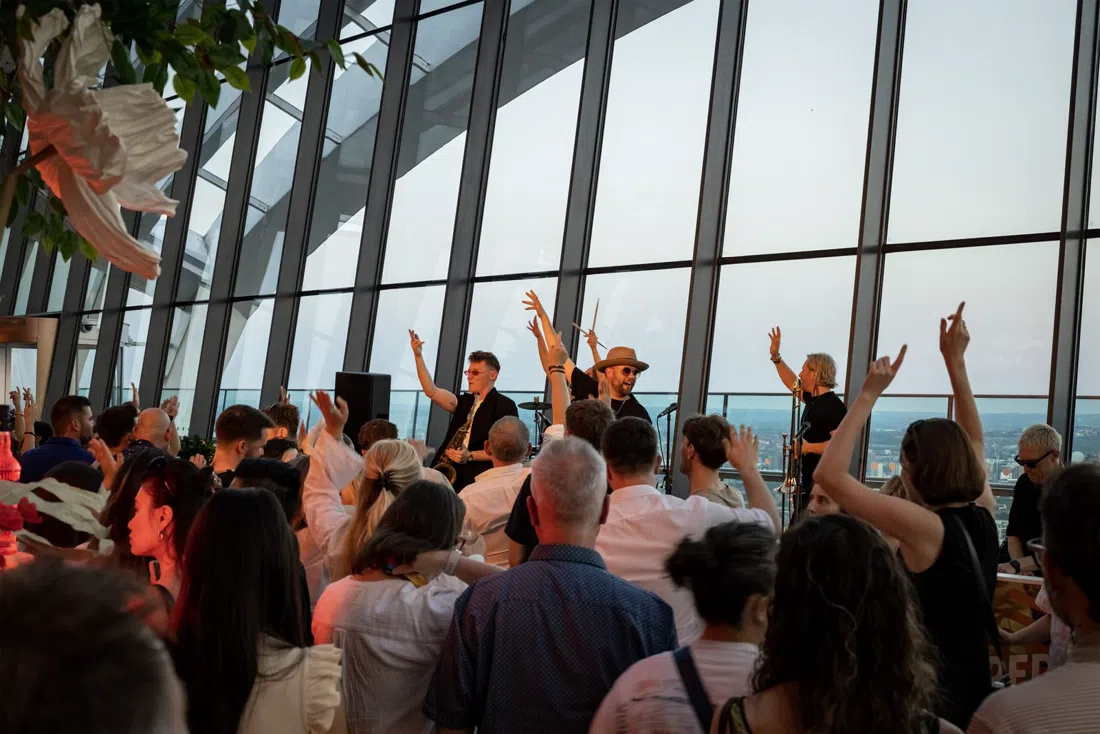
The Square Mile empties out in the evenings and at weekends, which is exactly when its gardens breathe. Start high. Sky Garden (in the City, atop 20 Fenchurch Street) is London's highest public garden and holds the best free skyline view in town, but every visitor books a timed slot up to three weeks ahead, so put the earliest morning slot in your diary before you do anything else; walk-ins are only admitted if there's space, and there rarely is. Slots vanish fast, and a group should book together rather than gamble on the door.
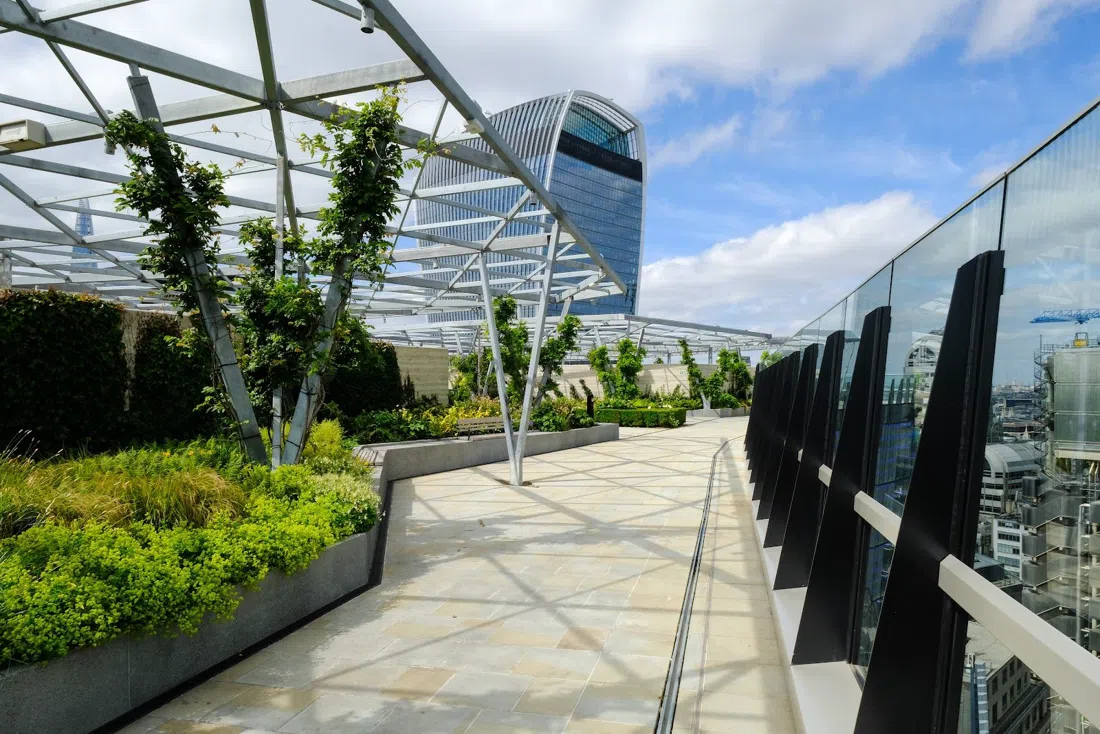
A five-minute walk north-east along Fenchurch Avenue brings you to a garden that asks nothing of you at all. The Garden at 120 (Fenchurch Avenue, in the City) is the largest free public roof garden in the Square Mile — no ticket, no slot, just an open-access lift and a wide deck with the same knock-out towers filling the sky. It's one of the roomier roof gardens, so unlike Sky Garden it comfortably takes a group without a booking, and it makes the perfect unhurried counterweight to the timed rush upstairs at number 20.
Drop back down toward the river and cut through to St Dunstan's Hill for the image most people mean when they say 'secret London'. St Dunstan in the East (near Tower Hill, in the City) is a WWII-bombed church whose roofless walls have been reclaimed by climbing figs and Virginia creeper, its old nave now a small, unstaffed garden open to anyone who wanders in. It's free and lovely and thoroughly photographed — which is the honest catch: the quiet moments here belong to early risers and late-afternoon stragglers. Small groups slip in easily; a full tour party fills it and breaks the spell.
From here it's a proper walk north-west, up through the lanes toward St Paul's, to a garden most tourists pass without a glance. Postman's Park (near St Paul's, in the City) is a pocket of green whose real reason to stop is the Victorian memorial wall to ordinary people who died saving others — a wall of hand-painted tiles that gives this tiny space a story its neighbours lack. It's free and always open, but it is genuinely small: fine for a short group pause, though the memorial itself gets tight when more than a handful gather to read it.
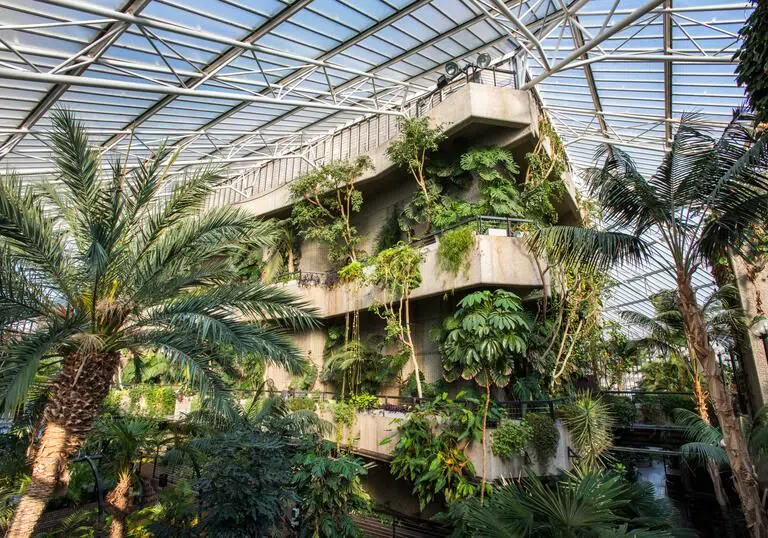
Close the City loop at the Barbican. Barbican Conservatory (Silk Street, in the City) is London's second-largest conservatory, a jungle of tropical planting folded into the brutalist estate — free, but with a timed-entry ticket you must book per person and released about a month ahead, so every member of a group needs their own. A limited run of day tickets appears from 9:30am if you're spontaneous. Two things to flag: it opens only Friday to Sunday, and the Barbican closes for a major refurbishment from 2027, so 2026 is very much the year to catch it.
Clerkenwell and Angel: a cloister and a community plot
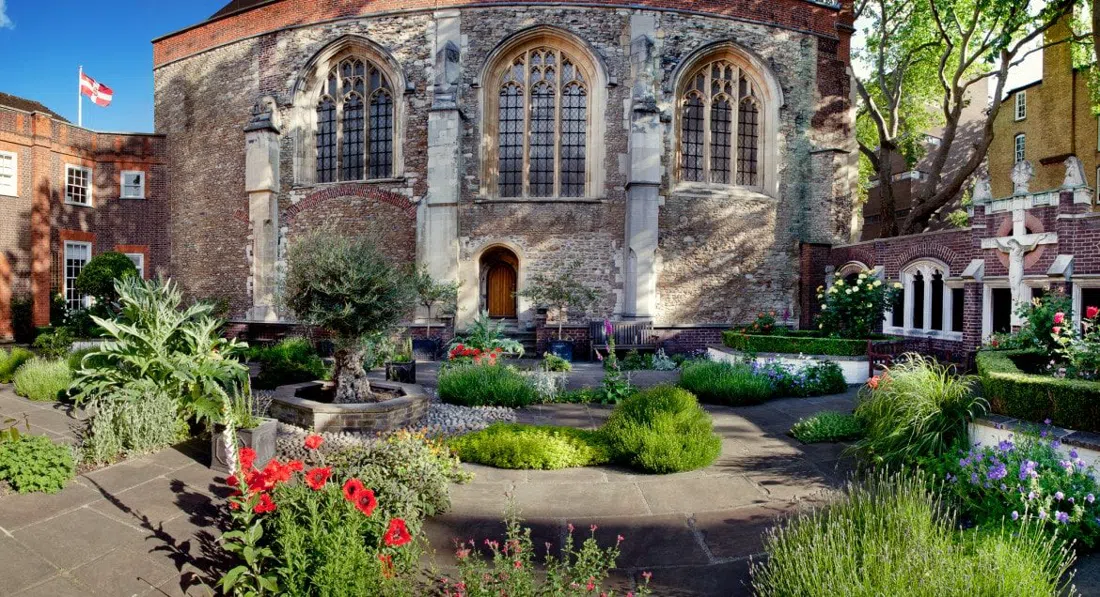
Walk north from Farringdon into Clerkenwell and you'll find a garden that keeps medieval time. The Cloister Garden, Museum of the Order of St John (Clerkenwell) is a hushed Knights Hospitaller courtyard tucked behind a high wall, reached free through the archway; the church and its medieval crypt open only on the museum's guided tours, which makes this an easy pairing — the garden for nothing, the tour for the history beneath it. It suits booked group visits to the wider site well, and it's the sort of place you'd never guess was there from the street.
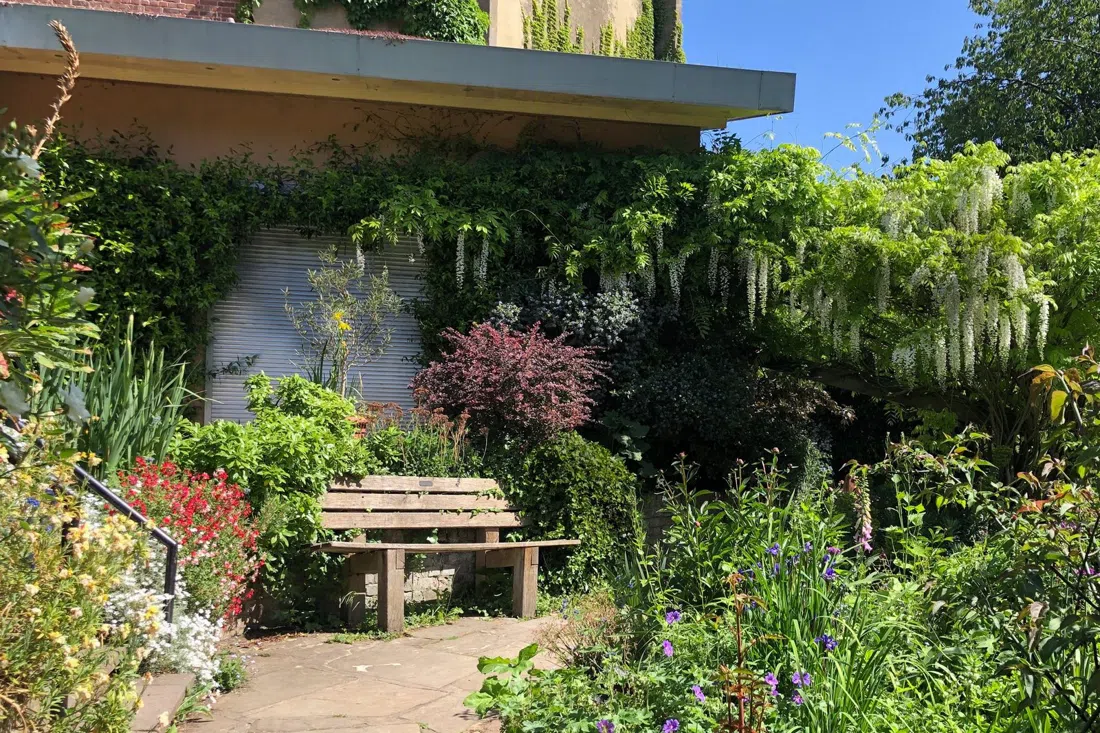
Carry on toward the Angel and the pace loosens further. Culpeper Community Garden (Angel, Islington) is a leafy, sheltered charity garden run by volunteers, moments from the traffic of Upper Street yet entirely apart from it — a genuine neighbourhood secret rather than a tourist stop. It's free and open, and welcomes group and school visits by arrangement, so a call ahead is the courteous move if there are more than a few of you.
The West End's last wild corner
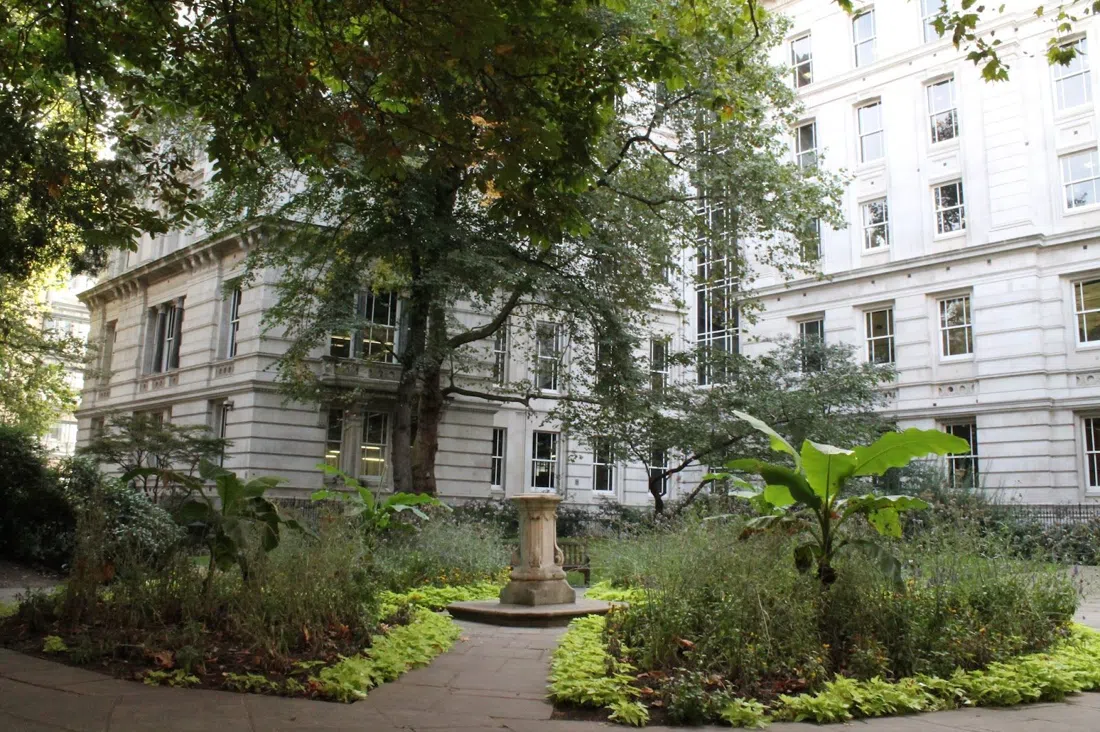
Steps from the theatres, behind St Giles, hides a garden that refuses to be tidy. The Phoenix Garden (Covent Garden) is the last survivor of the community gardens that once dotted this district, deliberately left a little untamed — nettles for butterflies, a pond, benches you can actually get. It's free, open daily and run by volunteers who lean on donations, and it welcomes visitors and small groups. Come here to reset between a matinee and dinner; it's the fastest way to lose the West End crush without leaving it.
West London: a corner of Kyoto
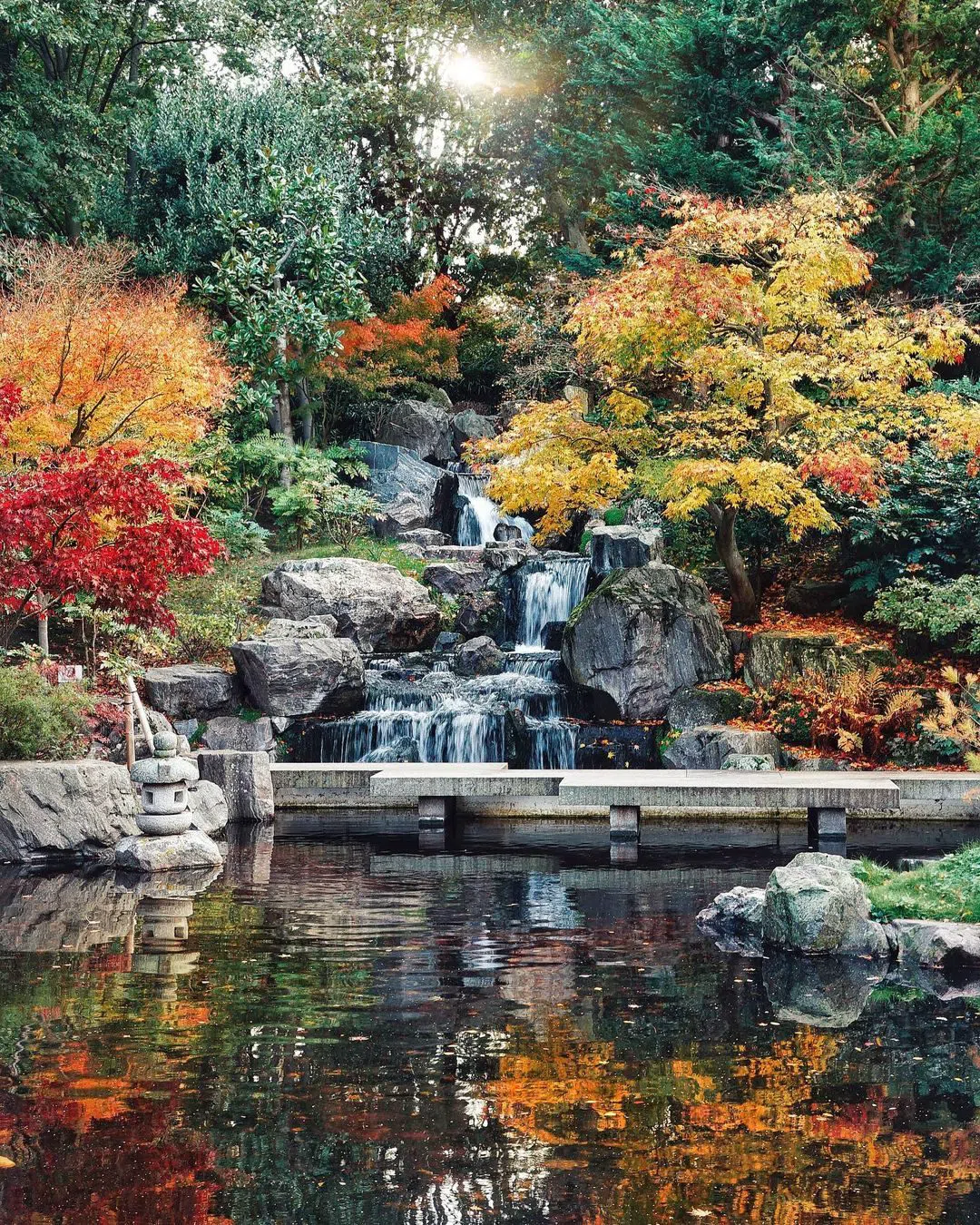
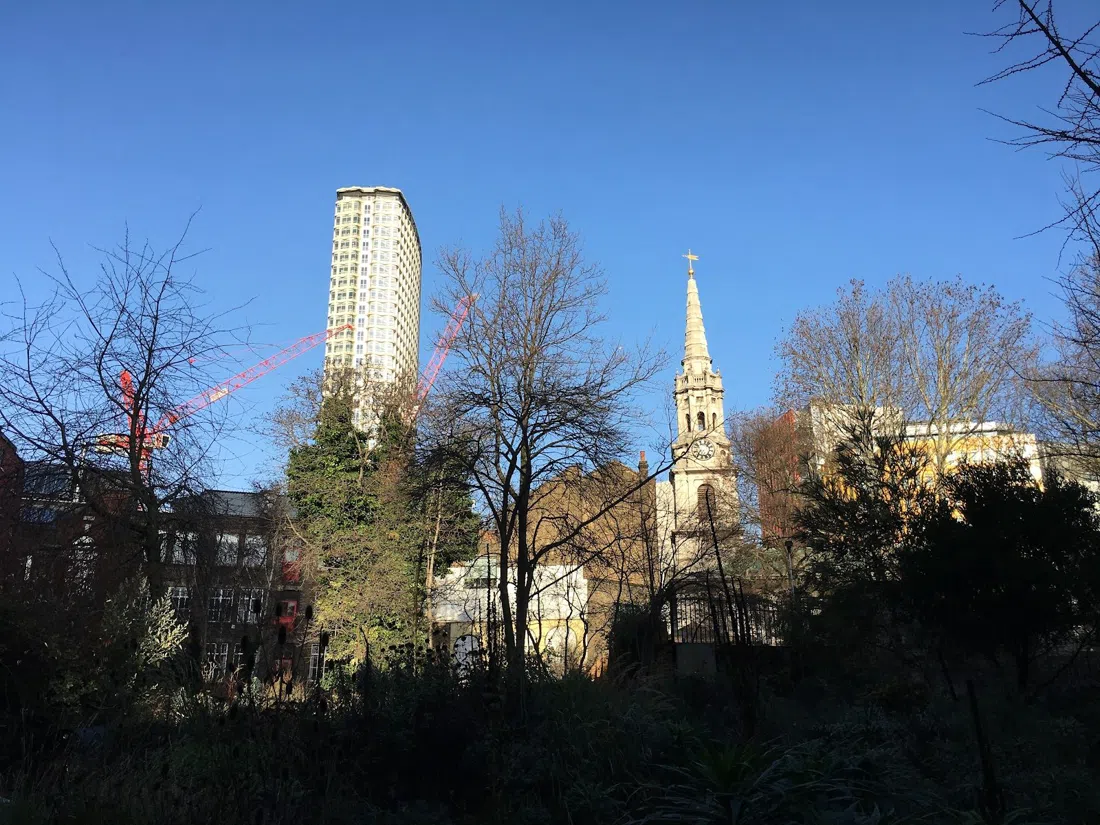
West, in the leafy sprawl of Holland Park, sits the most photogenic pocket of Japan in the city. Kyoto Garden (Holland Park) was a 1991 gift from the city of Kyoto, a compact stroll garden of tiered pools, stepping stones and — if you're lucky and quiet — a peacock picking across the gravel. It's free and needs no booking, so groups walk straight in; the wide gravel paths cope with a small party, but the garden is small, and a large tour makes it feel crowded fast. Mid-week and mid-morning, before the coach traffic, is when it earns its reputation.
The river gardens: Chelsea and Vauxhall
Down on the Chelsea Embankment, behind walls most people walk past for years, is London's oldest botanic garden. Chelsea Physic Garden (Chelsea) was founded in 1673 to grow medicinal plants and remains a working, walled sanctuary of the strange and the useful. This one is ticketed at around £14 for an adult, and it genuinely welcomes pre-booked group visits and guided tours — but check the day before you go, because it opens daily except Saturday, a quirk that catches out the unprepared. Give it a slow couple of hours; it rewards patience more than any other garden here.
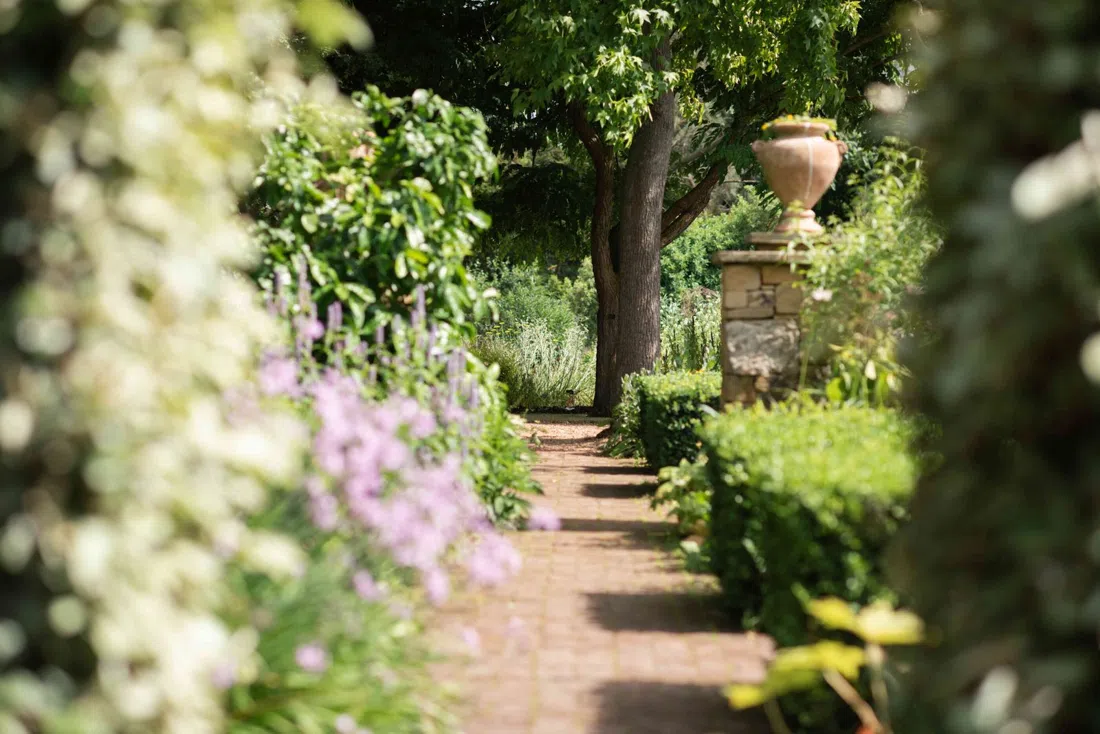
Upriver at Vauxhall, cross the water for something smaller and more intimate. Bonnington Square Garden (Vauxhall) is a densely planted pocket restored by its own community, a green square well off the tourist map — small, a little magical, and easily paired with the nearby Vauxhall City Farm. It's free, open and community-run, which also sets its limit honestly: it's built for a couple or a small group wandering through, not a coach party descending at once. Tread lightly and it's one of the loveliest surprises south of the river.
Up to Hampstead
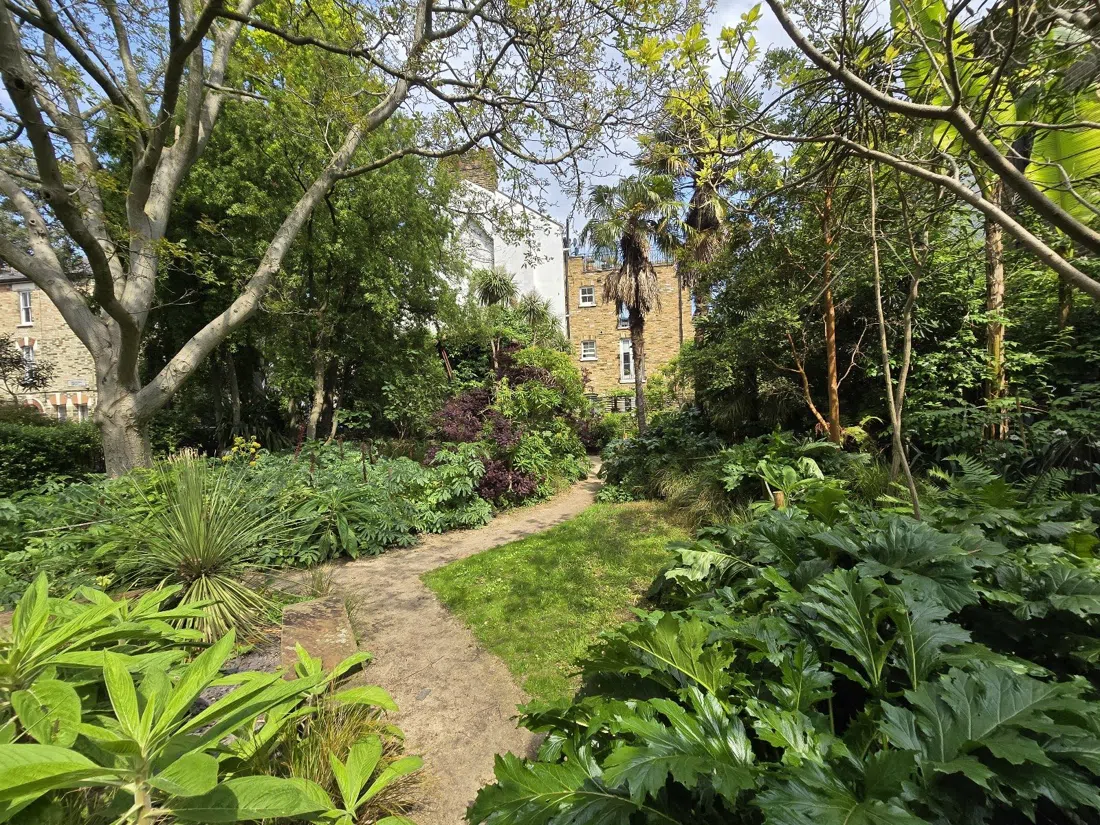
For atmosphere, nothing on this list beats the walk above Hampstead Heath. The Hill Garden and Pergola (Hampstead) is a crumbling Edwardian folly — a raised, wisteria-hung walkway of weathered stone columns that feels half-forgotten and wholly cinematic, with terraced beds and long views over West Heath. It's free and open until dusk, and the terraces are spacious enough for groups and photographers to spread out without treading on each other. Time it for late afternoon, when the light comes low through the columns and the wisteria, in season, does the rest.
South of the river, and east to the water
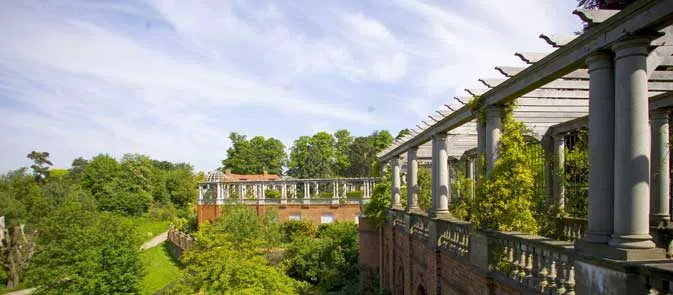
South, on a hilltop in Forest Hill, is one of London's best free views and one of its most reliably uncrowded gardens. Horniman Museum Gardens (Forest Hill) roll down a slope with a skyline panorama to rival the paid rooftops, generous lawns that swallow a group whole, and a bandstand, a small animal enclosure and — if you want it — a free, characterful museum alongside that takes group bookings. This is the low-effort, high-reward choice for anyone travelling with a mixed crowd or in changeable weather.

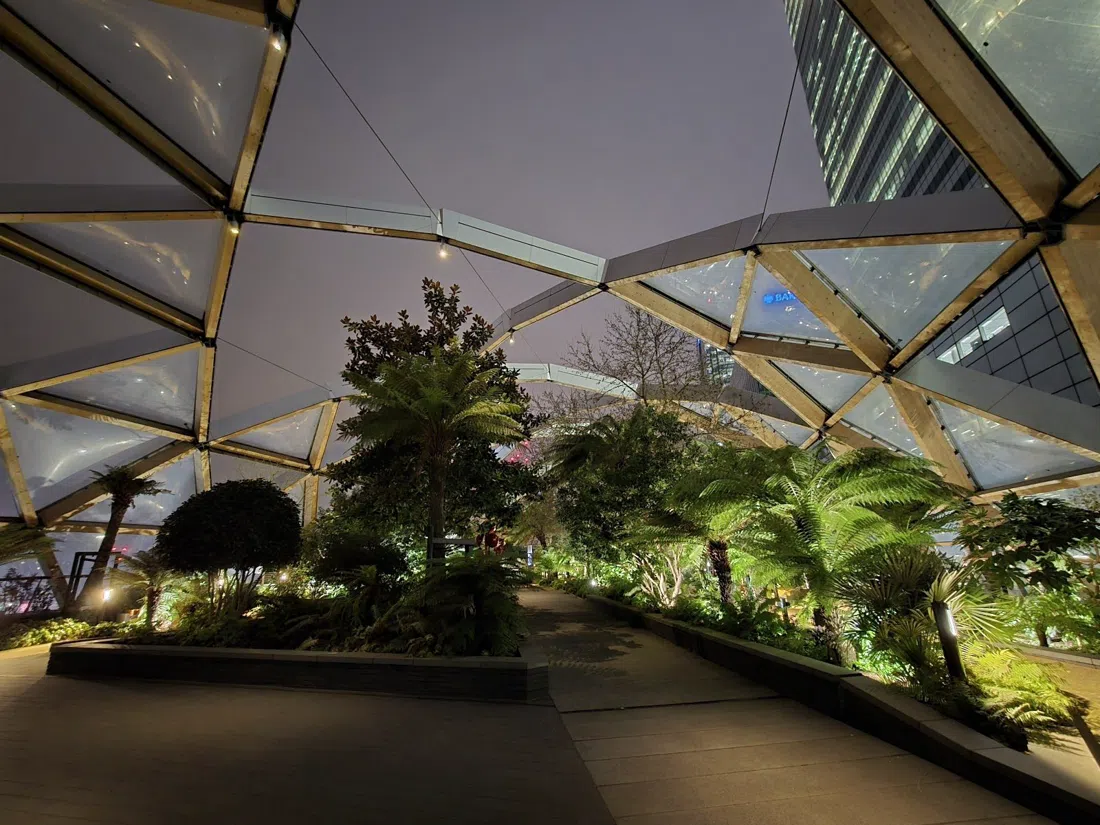
Finally, out at the water's edge of the docklands, is the garden that laughs at London's sky. Crossrail Place Roof Garden (Canary Wharf) is a sheltered sky-forest strung under a timber lattice roof, planted roughly along the meridian line with species from east and west of it. It's free and open-access, with plenty of benches and room to move, so it takes a group comfortably — and because it's covered, it's the rainy-day win that never disappoints. Combine it with the DLR ride out; the approach across the water is half the pleasure.
Between them these fourteen gardens sketch a version of the city that the postcards skip — greener, quieter and stranger than the parks everyone already knows. If you're building a trip around them, the London guide maps how the neighbourhoods connect, and it's worth basing yourself somewhere central enough to reach the City and the West End clusters on foot.
Practical notes: transport, cash, timing and budget
Getting around. Almost every garden here sits within a few minutes of a Tube, DLR or National Rail station — Monument and Bank for the City cluster, Farringdon for Clerkenwell, Angel for Culpeper, Tottenham Court Road for the Phoenix Garden, Holland Park for Kyoto, Sloane Square for the Physic Garden, Vauxhall for Bonnington Square, Hampstead for the Pergola, Forest Hill for the Horniman and Canary Wharf for Crossrail Place. A contactless card or phone taps you through every gate; the daily cap means you can string several gardens into one day without watching the fare.
Cash and cards. You'll rarely need notes or coins — travel, the Chelsea Physic ticket (around £14) and any café stop all take contactless. Carry a little cash only for the honesty-box donations at the volunteer-run gardens (the Phoenix Garden, Culpeper, Bonnington Square), where every coin genuinely keeps the place going.
Timing. The rule across the board is off-peak: mid-week over weekend, and the first hour after opening over any time after lunch. St Dunstan and Kyoto Garden reward the early riser most; the City roof gardens are best on a bright weekday morning before the lunchtime workers arrive. Watch the closures that catch people out — the Chelsea Physic Garden shuts on Saturdays, and the Barbican Conservatory opens only Friday to Sunday (and closes for refurbishment from 2027, so 2026 is the year to see it).
Booking. Two gardens need a timed ticket booked in advance — Sky Garden (up to three weeks ahead) and the Barbican Conservatory (about a month ahead) — and groups should book together rather than turn up hopeful. Everything else on this list is walk-straight-in free, though the volunteer gardens appreciate a heads-up for larger groups.
Budget. This is one of the cheapest days out London offers: thirteen of the fourteen are free, the Physic Garden is the only paid entry, and your only real spend is transport and whatever coffee you carry between stops. When it's time to pick a base for all this walking, a central London hotel search will keep the City, Clerkenwell and West End clusters within easy reach on foot.