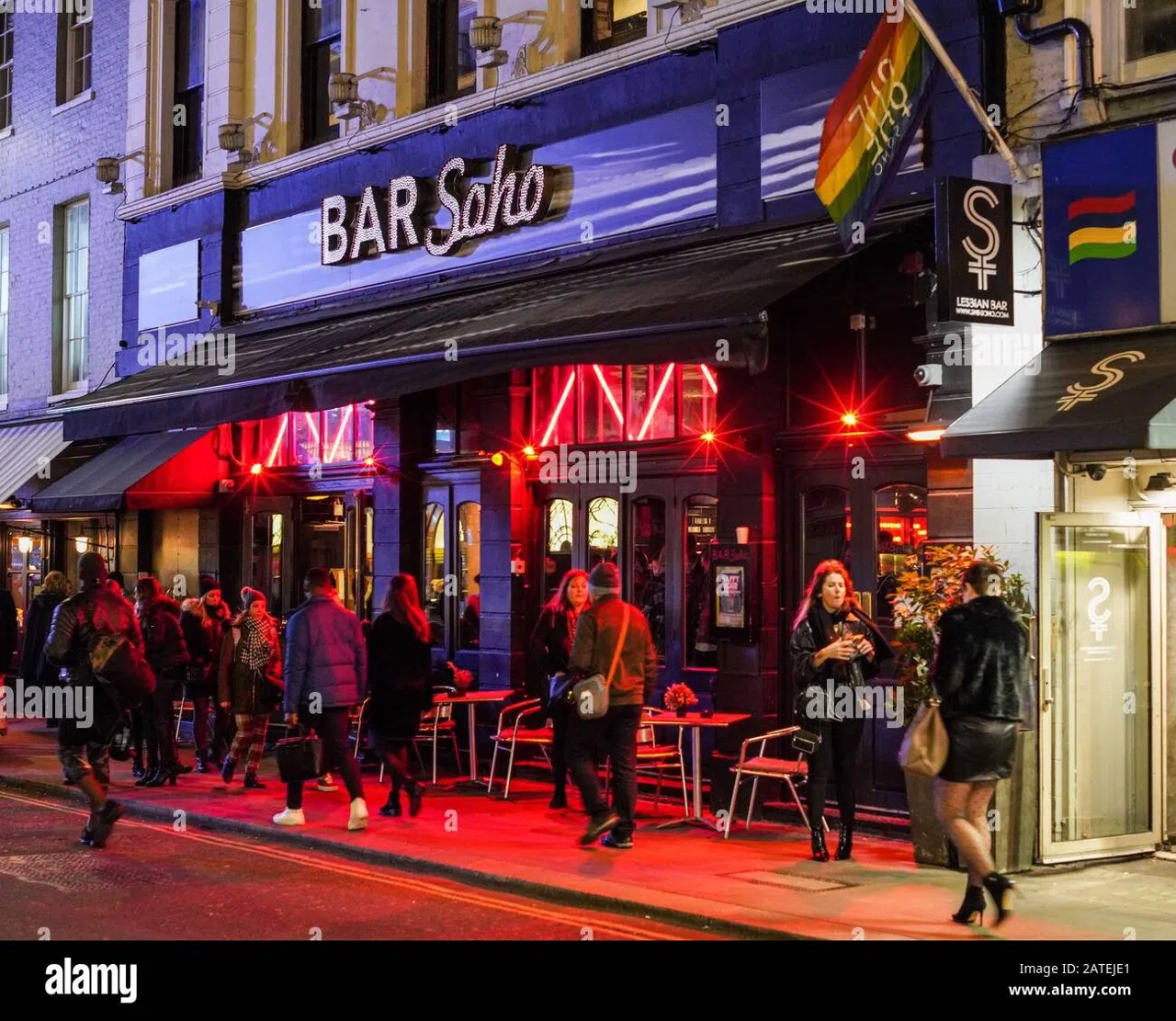
Old Compton Street fills with drinkers spilling out of doorways within minutes of the after-work rush, glasses balanced on window ledges because the pavement is the only free space left. Three streets over, the Covent Garden Piazza is still running its daily rota of opera singers and street magicians, indifferent to the noise leaking out of Soho's grid. This is the compressed, walkable core of the West End, a patch of central London that never really switches off: a knot of narrow Georgian streets — Dean Street, Frith Street, Brewer Street, Old Compton Street — where restaurant queues, theatre crowds and Soho's long-standing LGBTQ+ scene overlap on the same tight run of blocks, night after night.
What Soho & Covent Garden is known for
Soho and Covent Garden are the entertainment engine of the West End, and the two halves do very different jobs. Soho is restaurants, bars and theatre — a Georgian street grid where the queue for walk-in-only tapas at Barrafina on Dean Street can run alongside the queue for a table at Kiln on Brewer Street, both spilling onto pavements already thick with theatre-goers heading to a curtain-up. Old Compton Street is the spine of it, the address most people mean when they say Soho at all: narrow, neon-lit, lined with bars that have anchored London's LGBTQ+ scene since the 1980s, loud enough by 7pm that conversation happens at a shout.
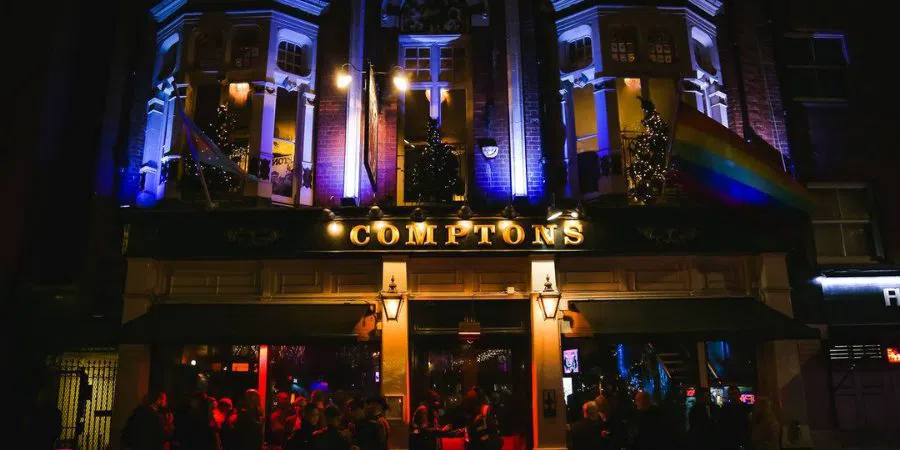
Covent Garden, three or four minutes' walk east, runs on an entirely different rhythm — the Piazza, the opera house, the shopping streets radiating out from Seven Dials. It's the half of the neighbourhood that works in daylight as well as after dark, and the half families and first-time visitors tend to gravitate toward, while Soho stays the domain of theatre-goers walking straight from a show, food-focused travellers chasing the walk-in queues and Chinatown, and a nightlife-first crowd, including the LGBTQ+ scene centred on Old Compton Street, that has no intention of going home before midnight. It is not, by the same token, an area for anyone chasing a quiet night's sleep or a bargain rate — this is one of the loudest patches of the city after dark, and prices at hotels and restaurants alike sit at a premium for the location.
Where to eat and drink
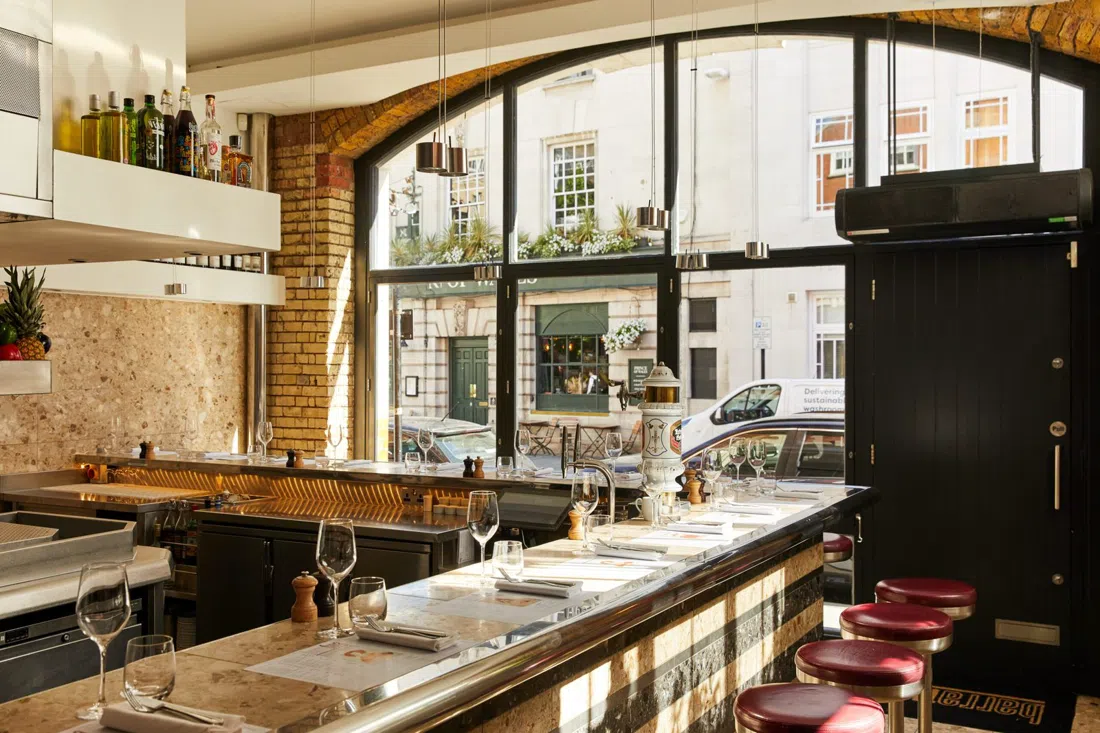
Soho's defining restaurant format is the walk-in queue, and Barrafina on Dean Street set the template. It's the original of a small Michelin-starred tapas group, takes no reservations, and seats parties from a standing bar or a virtual queue while a blackboard runs through daily specials — mackerel, carabinero prawns, whatever has come in that morning.
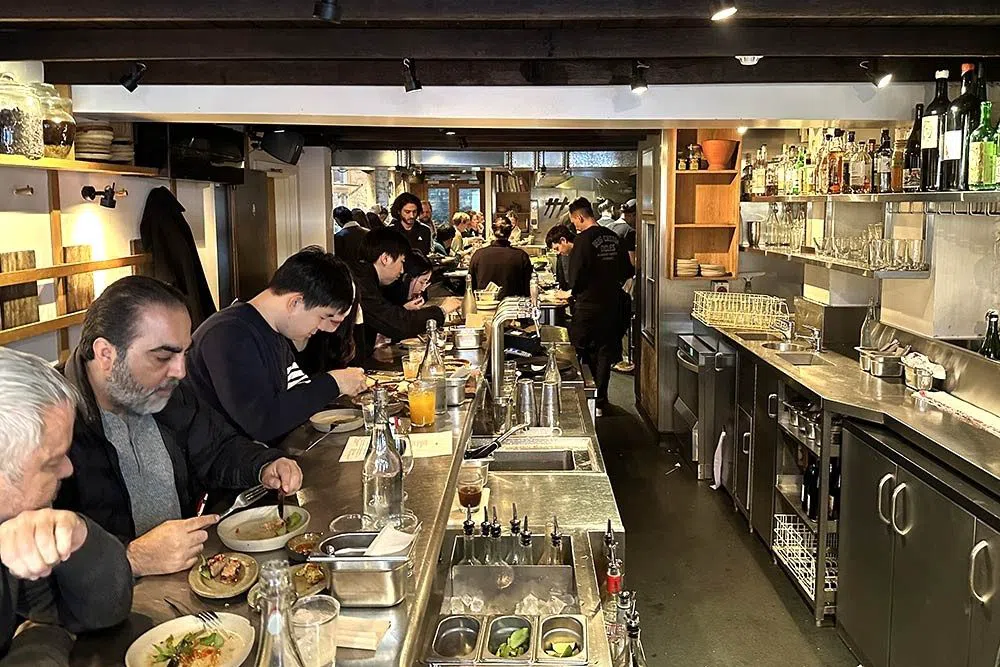
A few streets over on Brewer Street, Kiln runs the same no-booking logic through a different cuisine entirely: Thai, Myanmar and Yunnan border cooking, done over clay pots and open flame, Bib Gourmand-rated and just as unwilling to take a phone booking as Barrafina is.
For something that will actually seat you the moment you arrive, BAO Soho on Lexington Street is the original Taiwanese bao restaurant from the BAO founders, small and steamy and built around a short, precise menu. Andrew Edmunds sits at the other extreme — a candlelit 1985 townhouse restaurant on Lexington Street with a daily-changing modern European menu, one of the handful of survivors that remembers what Soho looked like before the tapas queues arrived. Drinking follows the same split personality. Bar Termini on Old Compton Street is a tiny Italian-style cocktail bar built almost entirely around negronis and Martinis, room for maybe a dozen people and a queue that forms outside anyway.
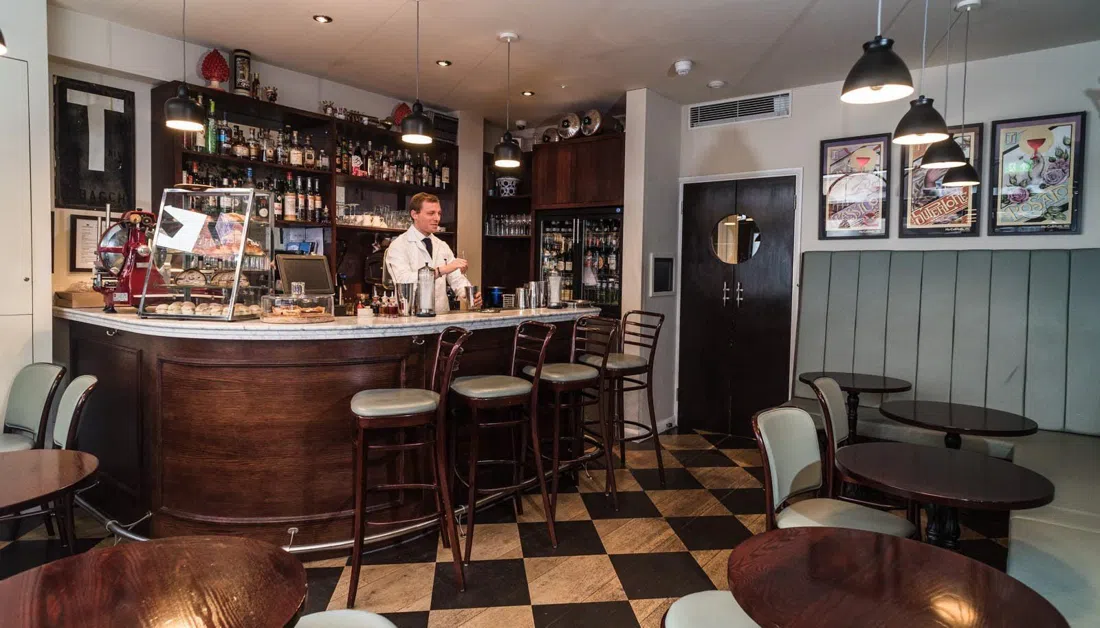
Swift, spread across two floors, carries a 300-bottle whisky list and live jazz sessions for anyone who'd rather sit than stand at a bar. And The French House on Dean Street is the neighbourhood's living relic — a former base for the Free French during the war that, to this day, still won't serve you a pint.
Nightlife
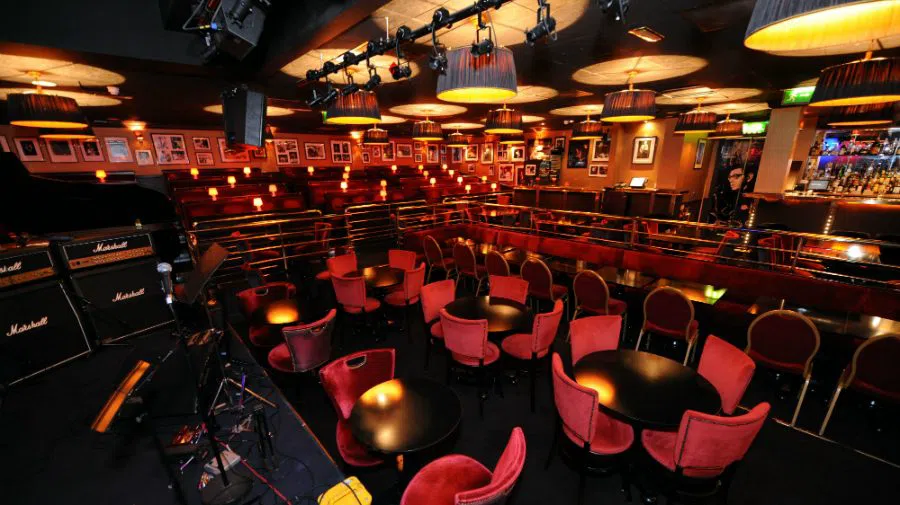
Ronnie Scott's on Frith Street has been London's home of jazz since 1959, running two shows most nights in a dim, velvet-booth basement that hasn't lost its atmosphere even as it's changed its footprint. The club expanded in 2026 with Upstairs at Ronnie's, a 140-capacity room built above the original space for emerging acts — the biggest change to the building in years.
Soho's LGBTQ+ nightlife runs its own parallel circuit, centred on the corner of Old Compton and Wardour Street where The Village, Soho's first gay bar, still runs weekend DJs and go-go performers to a crowd that treats it as a fixture rather than a novelty. Newer arrivals keep landing in the same few blocks: Coven, a five-floor queer venue, opened in June 2026 in the former G-A-Y Bar building, instantly adding one of the biggest rooms on the strip to a scene that was already the densest of its kind anywhere in the city.
Between the jazz basements and the gay bars, this is a neighbourhood built for staying out past the last tube — which, given how central it is, matters less here than it would almost anywhere else in London.
Things to do
The Royal Opera House anchors Covent Garden's Piazza with a full programme of opera and ballet, and it rewards a visit even without a ticket to a performance — foyer access, backstage tours and ballet-themed afternoon teas are all built for people who just want to look inside.
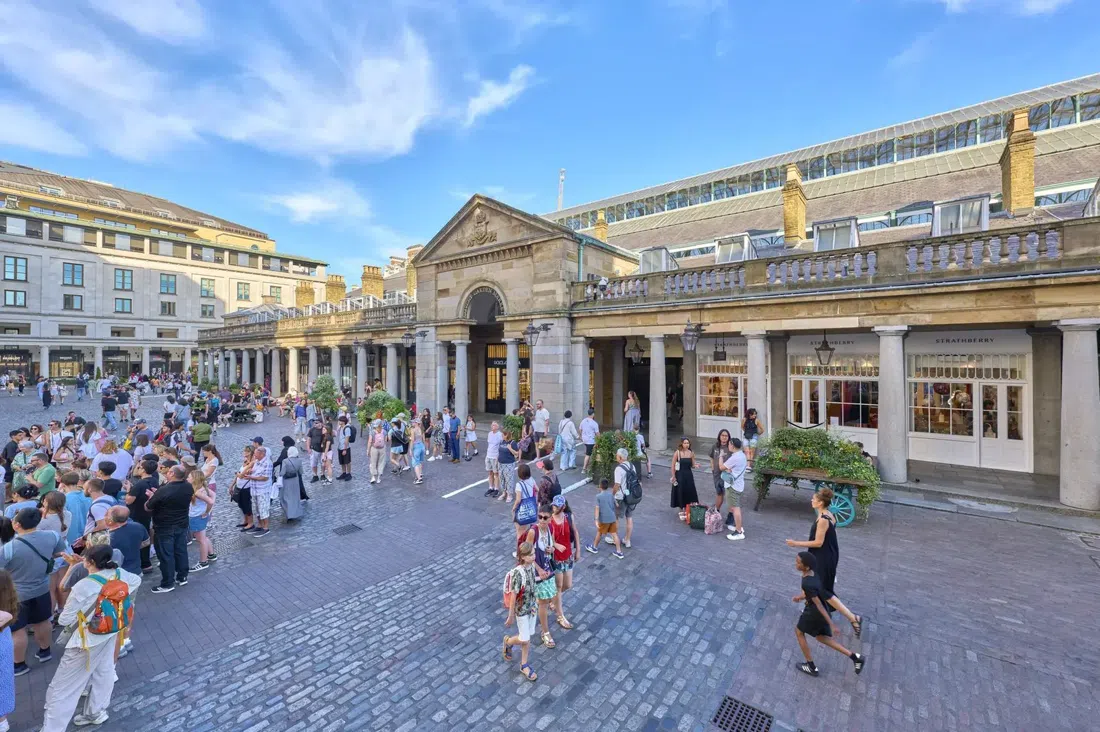
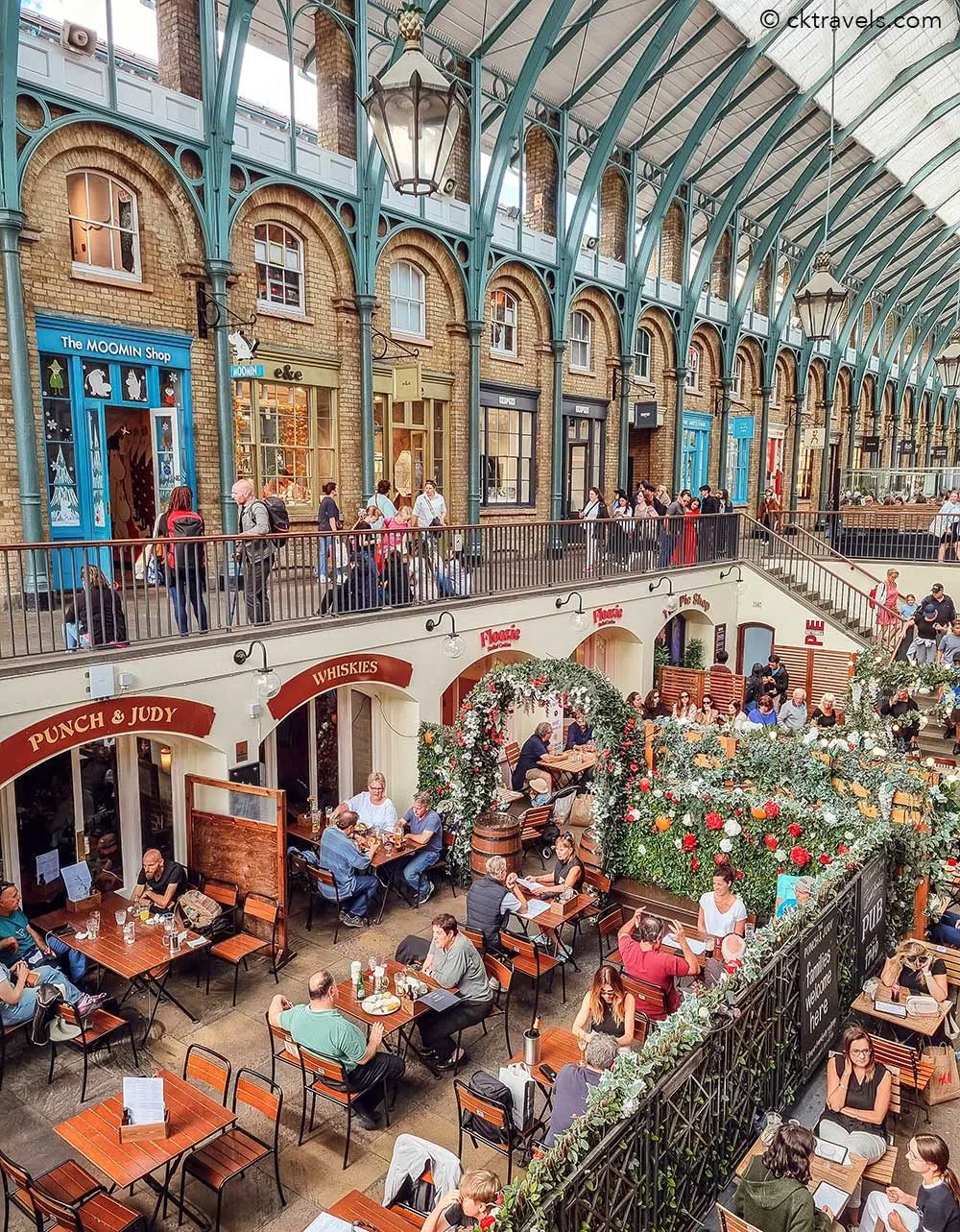
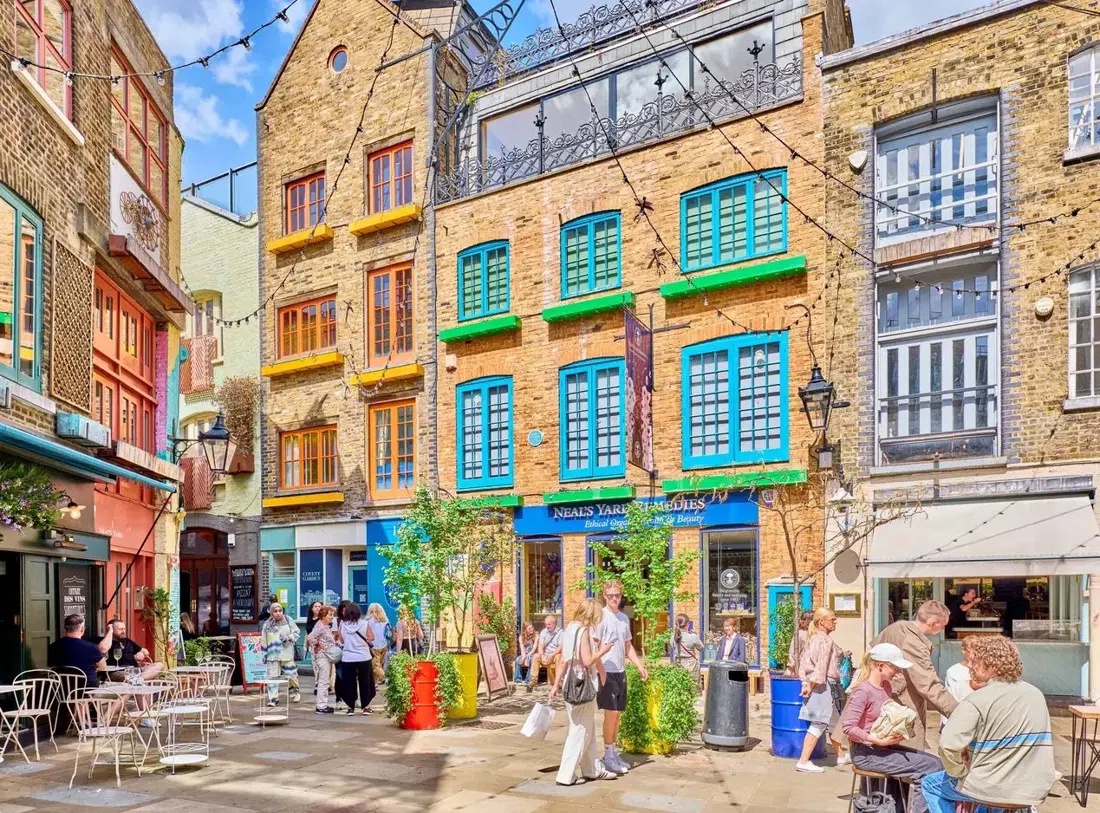
The Piazza itself deserves time rather than a walk-through: it has run daily street performance on an official pitch system dating back to the 1660s, so the opera singers, jugglers and magicians working the cobbles aren't buskers who wandered in but performers on a rota older than most of the buildings around them. A short walk off Seven Dials, Neal's Yard is the neighbourhood's quietest surprise — a small, brightly painted courtyard holding the Neal's Yard Remedies flagship and Neal's Yard Dairy, a pocket of colour and calm that most visitors find by accident rather than design.
Shopping
Seven Dials, where seven streets meet at a central sundial column, is the area's shopping focus: around 90 stores packed into a few short blocks, running from independent boutiques and cult coffee roasters to jewellers and vintage specialists, alongside international flagships. Beauty brands have been landing here too — Code8 Beauty recently opened a new flagship nearby, joining a retail mix that has grown noticeably more polished than Soho's after-dark reputation might suggest, without pushing out the smaller, independent shops that make Seven Dials worth a wander rather than a single stop on the way to somewhere else.
Where to stay in Soho & Covent Garden
This is the area to book if the priority is walking to a show, dinner and a bar without a single tube journey — the trade-off is noise and price. Streets around Seven Dials and the eastern edge of Covent Garden tend to run a touch calmer than the thick of Soho, while still sitting only a few minutes' walk from the restaurants and theatres that make staying here worth it in the first place. It suits theatre trips, walk-in restaurant hopping, LGBTQ+ nightlife and short breaks built entirely around being able to walk everywhere, and it does not suit anyone hoping for a bargain: expect to pay top-of-market rates for the location, with even a modest room here costing more than an equivalent one a mile further out.
Getting around
The area is served by several Underground stations within a few minutes' walk of each other: Covent Garden on the Piccadilly line, Leicester Square on the Northern and Piccadilly lines, and Tottenham Court Road on the Central, Northern and Elizabeth lines — which puts Heathrow within direct reach via the Elizabeth line without needing to change trains. Given how compact the neighbourhood is, most visitors will do more walking than riding once they've actually arrived; the stations matter mainly for getting in and out rather than for moving between Soho and Covent Garden themselves, which is a ten-minute walk at most. It's a well-lit, heavily trafficked part of the city, busy with police and door staff late into the night, though standard city-centre caution still applies — pickpocketing risk rises in the dense crowds around the Piazza and Leicester Square, so keep bags zipped and phones in front pockets rather than back ones.