London neighbourhood guide
Southwark & Bermondsey, London: Market Ironwork and Beer-Mile Railway Arches
A street-by-street feature on the London neighbourhood where a thousand-year-old food market and a brewery-packed beer mile sit a ten-minute walk apart under Victorian rail arches.
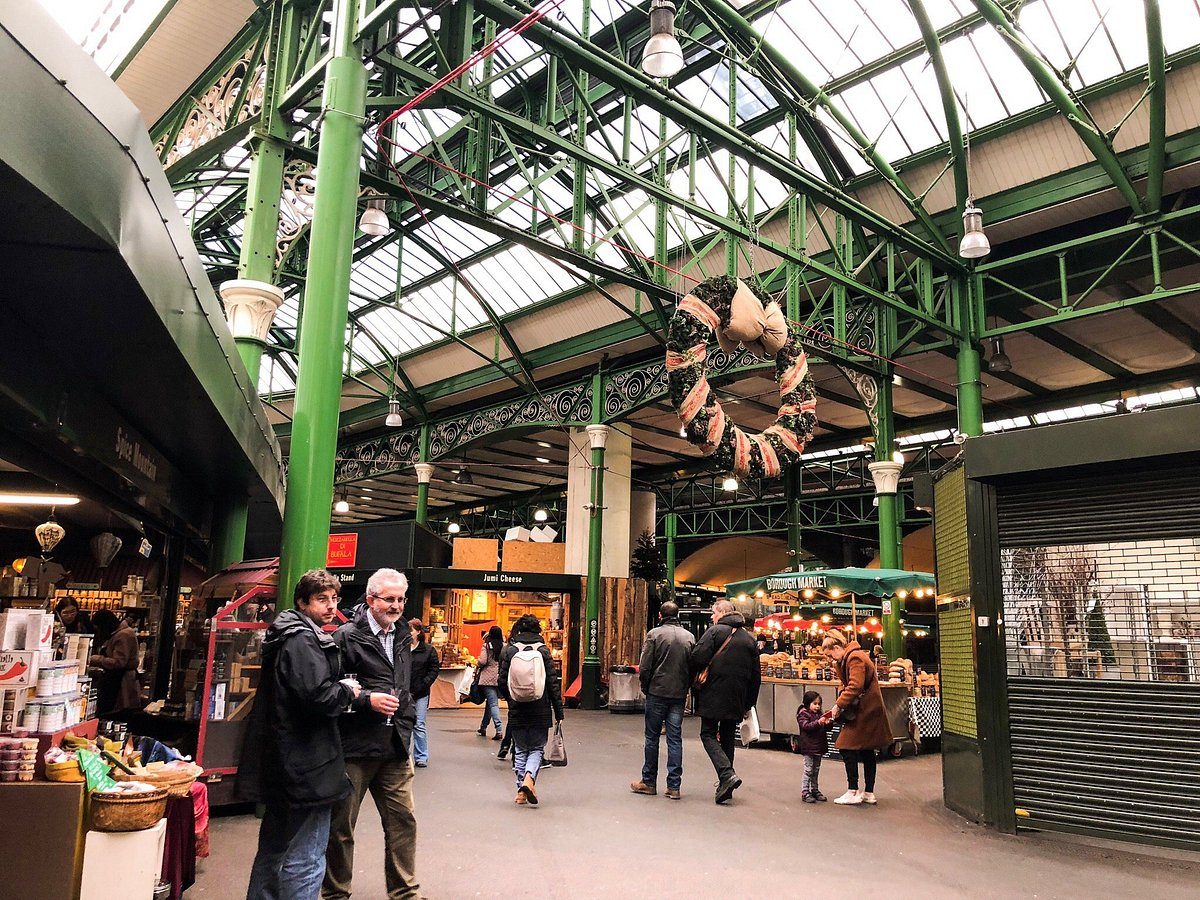
Borough Market's traders still shout over each other under the railway arches by London Bridge station, six mornings a week, the way they have since long before the market was "discovered" by anyone chasing a food-tourism headline. Half a mile east, more than twenty breweries and taprooms operate out of Victorian railway arches along Druid Street and Enid Street, pulling pints for crowds that treat a Saturday-afternoon crawl the way other neighbourhoods treat a pub quiz. This is South London that never tried to be Shoreditch. Southwark, up by the river, runs on institutional weight — Tate Modern's turbine hall, Shakespeare's Globe, the wrought-iron sheds of Borough Market — while Bermondsey, a ten-minute walk south-east, is warehouses and rail arches that spent decades as light industry before chefs and brewers moved in and started paying the rent.
What Southwark & Bermondsey is known for
The area's two defining landmarks are both repurposed Victorian infrastructure, which tells you something about how this corner of London works. Borough Market has traded on this site in some form for over a thousand years, and the wrought-iron train sheds it trades under today were rebuilt in the 1850s. Crucially, it's still a working wholesale market before dawn, hours before the lunchtime crowds and the tourist buses turn it into the sit-down, street-food destination most visitors know it as.
A mile or so east, that same appetite for reuse shows up in the railway arches themselves: brick vaults built to carry Victorian trains now house breweries, tapas bars and a gallery large enough to be mistaken for a small aircraft hangar. The two halves of the neighbourhood — market Southwark and industrial Bermondsey — read almost as separate places connected by a single long walk, and the joy of the area is doing that walk slowly.
Where to eat and drink
Borough Market remains the area's centre of gravity for food, and it rewards going early. Kappacasein Dairy pulls a queue from opening for its Montgomery cheddar and Ogleshield toastie, grilled to order and eaten standing up because there's nowhere else to sit. Brindisa's chorizo rolls are usually sold out by mid-afternoon, so a lunchtime visit is really a late-morning one. The market runs full trading from Wednesday to Saturday, opens with a thinner spread of stalls on Monday and Tuesday, and closes for full retail trading on Sundays, though a handful of the restaurants and bars around its edges stay open regardless.
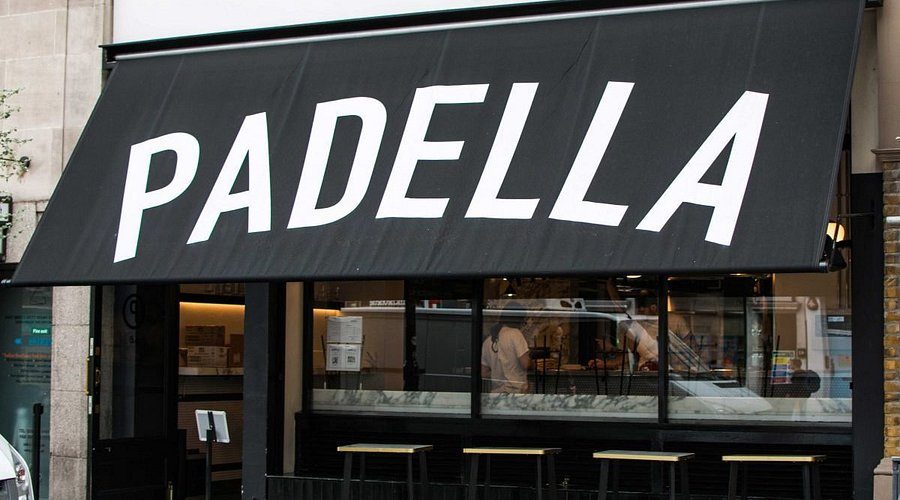
A few minutes south on Southwark Street sits Padella, the hand-rolled pasta spot that took a Michelin Bib Gourmand and still doesn't take bookings; the dish everyone orders is the Pici cacio e pepe, and the queue outside is part of the ritual now.
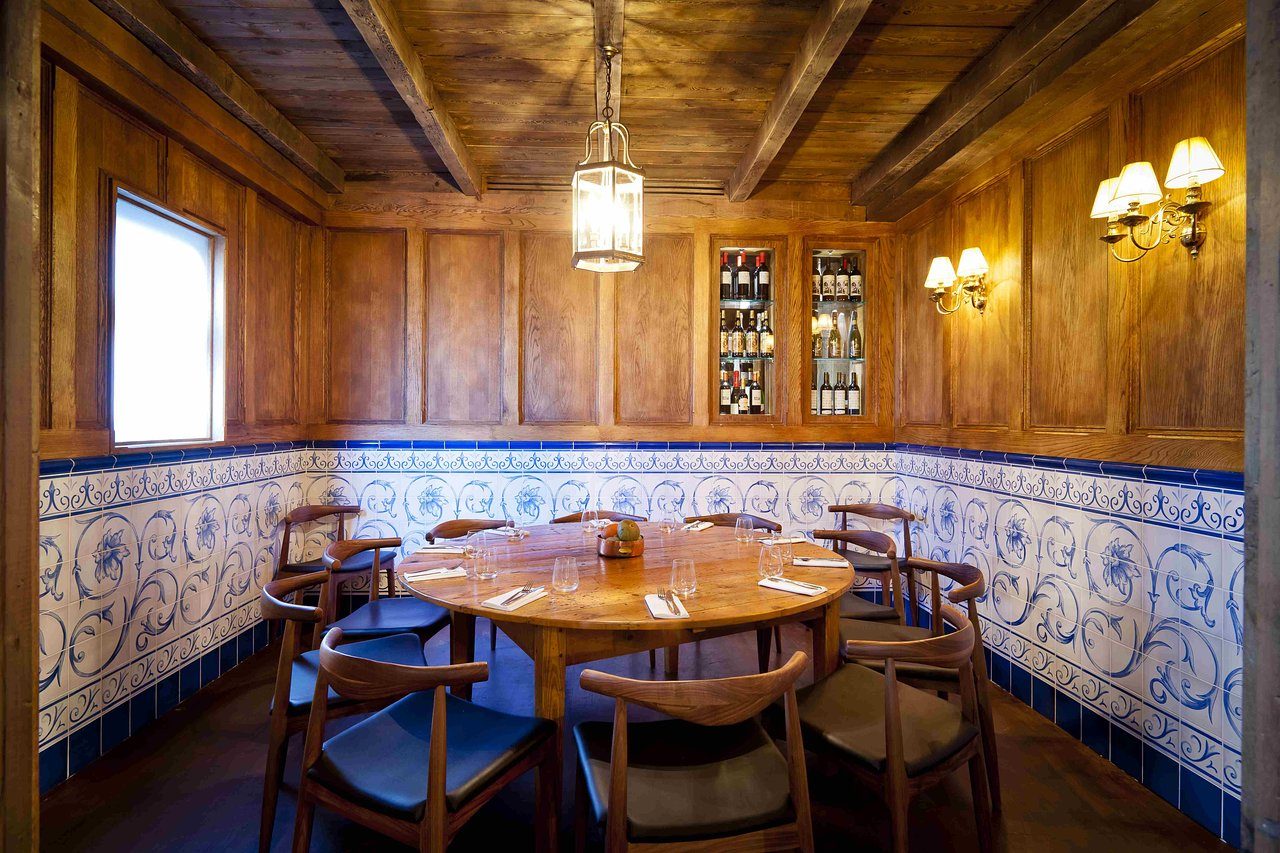
Over on Bermondsey Street, the same no-reservations logic governs a cluster of genuinely good restaurants. José Pizarro's narrow, first-come-first-served tapas bar, José, does sherry and small plates at a bar you're lucky to get a stool at; his bigger sibling restaurant, Pizarro, sits next door for anyone who wants a fuller Spanish menu and an actual table. A few doors along, Flour & Grape does fresh pasta and Italian wine with the same no-bookings policy — the advice from regulars is to arrive before 6.30pm if you don't want to wait.
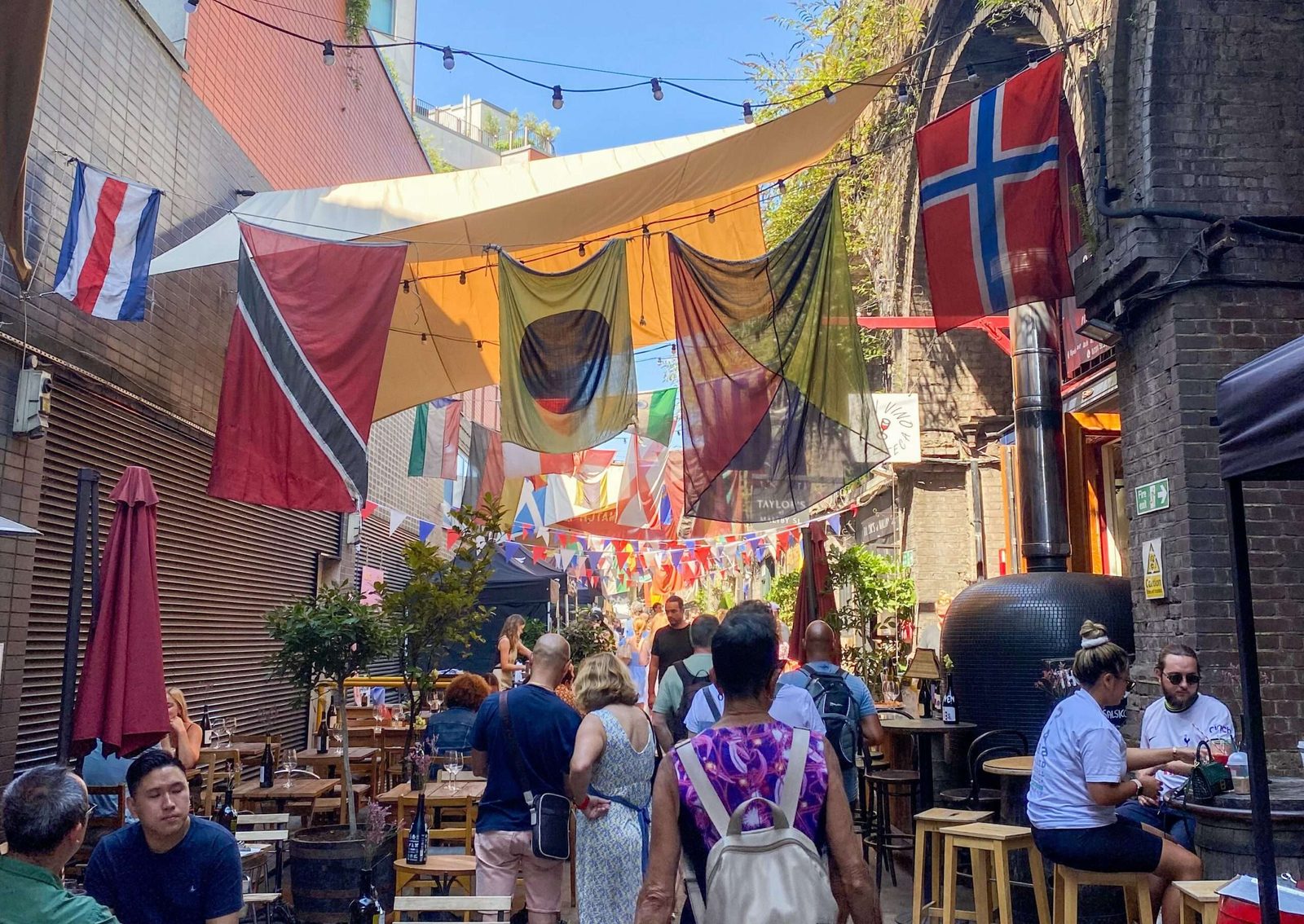
Saturday mornings belong to Maltby Street Market, the Ropewalk crawl through a run of railway arches with around thirty traders, including St John Bakery and Little Bird Gin's own distillery. It's smaller and less photographed than Borough Market, which is exactly its appeal — you can actually move between stalls without queuing three deep.
Going out: the Bermondsey Beer Mile
The taprooms strung along Druid Street, Enid Street and the arches toward South Bermondsey station are the area's real nightlife, and they run on brewery hours rather than pub hours. Most only open from Thursday or Friday through Sunday, so turning up on a Monday evening expecting a pint means finding shutters down at almost every arch. Pints along the mile run cheap by London standards, from about £5 to £6.
The Kernel Brewery, in Arch 11 on Dockley Road, has been doing this since 2009 — it's the original Bermondsey brewery that arguably started the whole crawl — and it opens Saturdays only, selling straight from the brewery floor rather than through anything resembling a conventional bar.
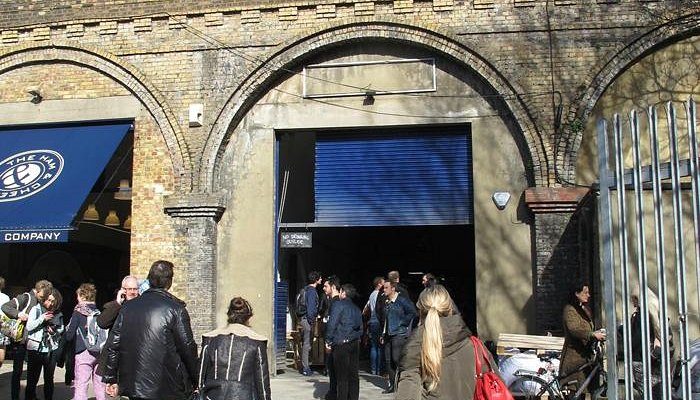
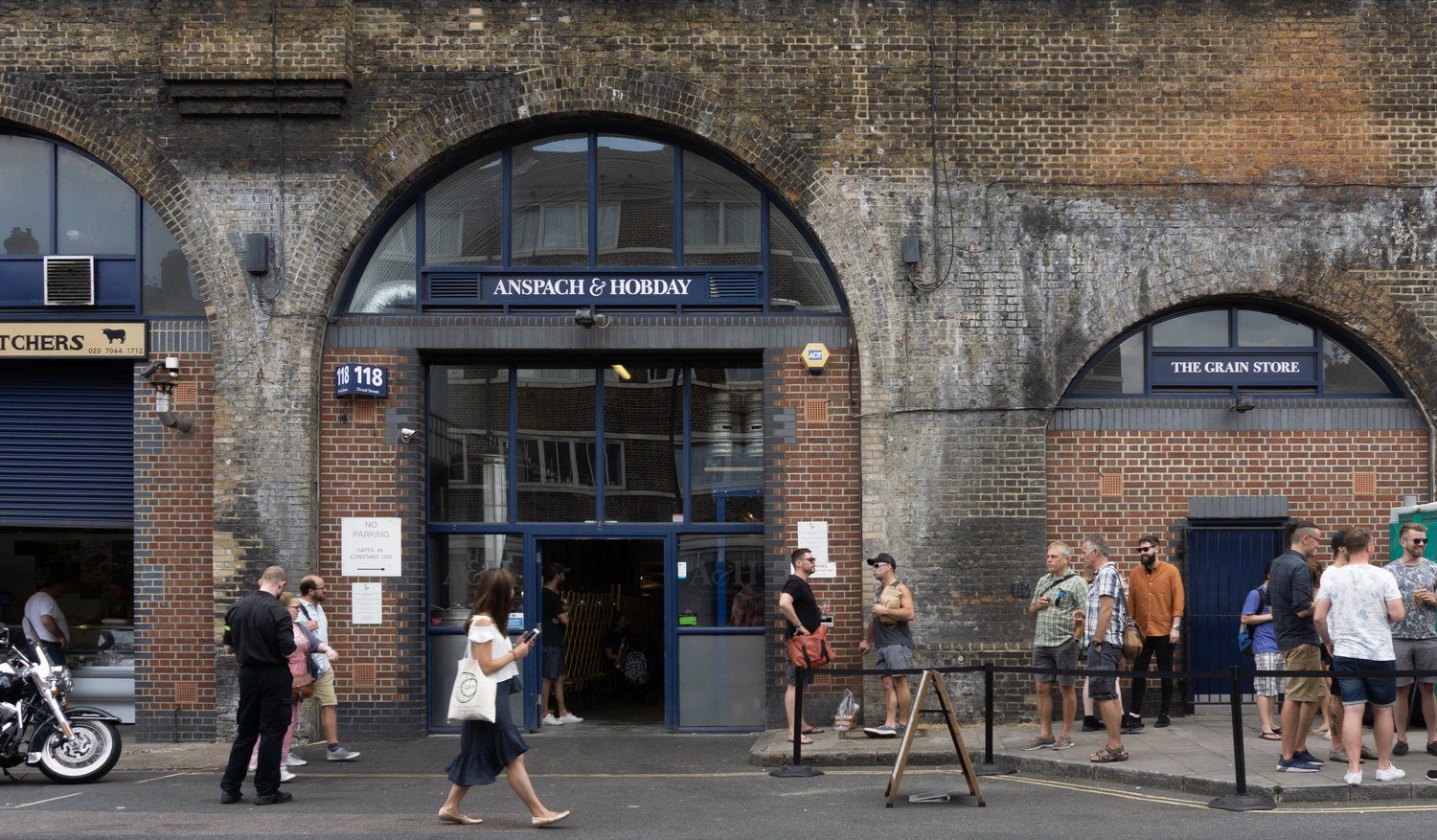
Southwark Brewing Co. runs a dog-friendly taproom in Arch 46 on Druid Street, open Friday to Sunday, pouring a regular pale ale and stout to a crowd that spills out onto the cobbles. Anspach & Hobday's Arch House, at 118 Druid Street, is one of the few taprooms on the mile open most of the week, and it's worth seeking out for its mixed-fermentation and barrel-aged beers rather than the usual session pale. Further along, Cloudwater has set up a Bermondsey outpost at Arch 35 on Bermondsey Street — the Manchester brewery trucks its beer down rather than brewing on site, but the taproom itself has the same arch-and-bench feel as its neighbours.
For something smaller and closer to the market, The Rake, tucked into Winchester Walk by Borough Market, packs well over a hundred beers into a space that holds just 44 people — it's the kind of bar where you end up talking to whoever's standing next to you because there's no room not to.
Things to do and what to see
Tate Modern anchors the Southwark end of the neighbourhood: free entry, a turbine hall that rotates a new large-scale commission, and a members' bar on the top floor with one of the best free river views in London, even if you're not a member and just wander up to look.
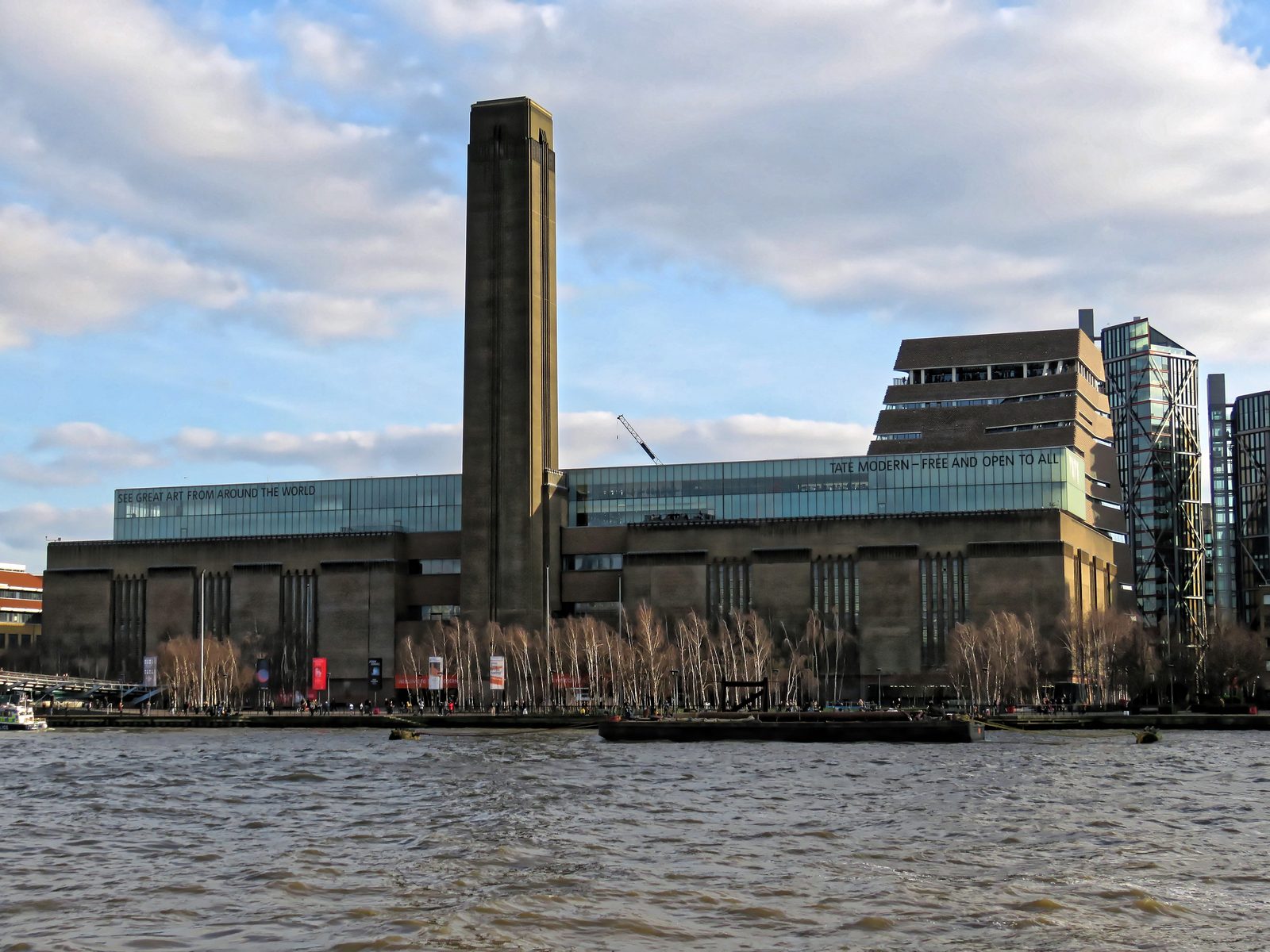
From there it's a flat, easy walk east along the Thames Path past Shakespeare's Globe and on toward Borough. Southwark Cathedral, London's oldest Gothic church, sits just a few minutes from Borough Market and is easy to duck into between market stops. Near London Bridge station, the Old Operating Theatre Museum hides a preserved 1822 surgical theatre at the top of a spiral staircase inside a former church roof — one of those places that's easy to walk past entirely if you don't know to look up. For a view over all of it, the Shard's ticketed viewing gallery occupies floors 68 to 72 of the UK's tallest building, just south of the station.
Bermondsey Street has its own cultural cluster. White Cube Bermondsey occupies a converted 1970s warehouse and counts as one of Europe's largest commercial gallery spaces, with free entry and shows that swing between blue-chip names and genuinely challenging new work. Nearby, the Fashion and Textile Museum, founded by Zandra Rhodes and housed in a building she had painted bright pink and orange, runs rotating fashion and textile exhibitions in a space that's impossible to miss from the street.
Don’t miss in Southwark & Bermondsey
Eating your way through the historic Borough Market.
Walking the pedestrianized South Bank path past the Globe Theatre.
Exploring the contemporary art galleries of Bermondsey Street.
Shopping
Bermondsey Square's antiques market runs every Friday morning, from around 6am until early afternoon, and it's the oldest market of its kind in the country. Traders moved south of the river in 1950, when the old Caledonian Market in Islington was redeveloped, and the dealers who work Bermondsey Square still turn up before dawn, torches out, working the stalls before the square properly wakes up. It's a serious trade market as much as a browsing one — the good pieces move fast, often before most visitors have had breakfast.
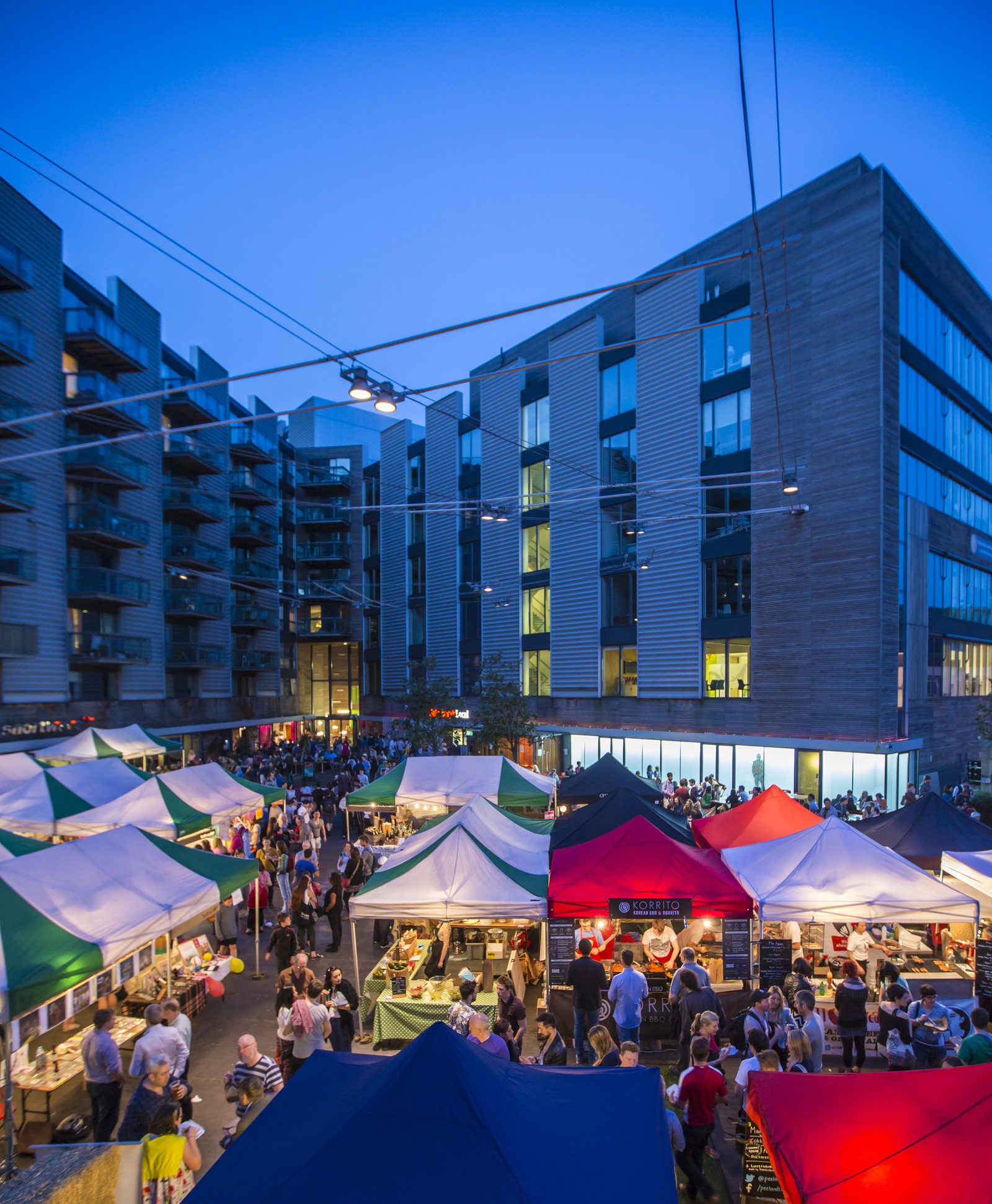
Bermondsey Street itself, beyond its restaurants and galleries, is where the neighbourhood's independent shopping lives, threading between the food and culture stops rather than announcing itself with its own destination status — it rewards wandering between the market and the beer mile rather than a dedicated shopping trip.
Where to stay in Southwark & Bermondsey
The streets right around London Bridge station and Tooley Street put you closest to the Shard, Borough Market and the fast Jubilee and Northern line connections, at the cost of being the busiest, most touristed stretch of the whole neighbourhood. Hotels here run from big chains — the Hilton London Tower Bridge and a citizenM property among them — up to boutique options further into Bermondsey proper, where things quiet down once you're past the beer mile's arches. Budget-wise, expect mid-range to expensive prices around Borough Market and the chef-led restaurants on Bermondsey Street, while the beer mile itself stays cheap, with pints from about £5 to £6; hotel stock spans from budget chains through to boutique, so there's a real range depending on how close to London Bridge station you want to be.
Where to stay here
Hotels in Southwark & Bermondsey
Our best-rated stays in this neighbourhood. Prices are approximate “from” rates — confirmed at the provider when you continue. We may earn a commission if you book through our partners — at no extra cost to you.
 In this area
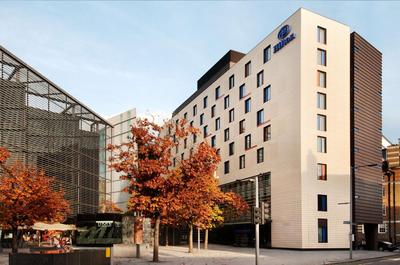
Hilton London Tower Bridge
 In this area
 In this area
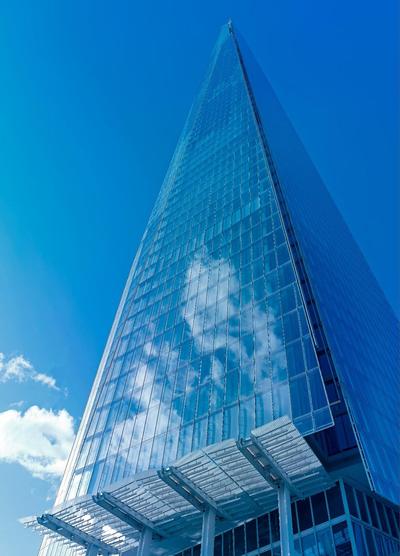
Shangri-La The Shard, London
 In this area
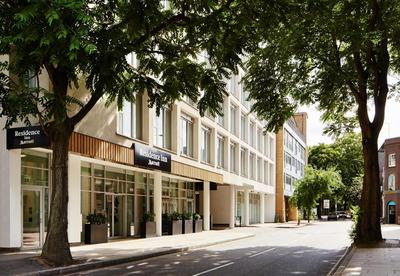
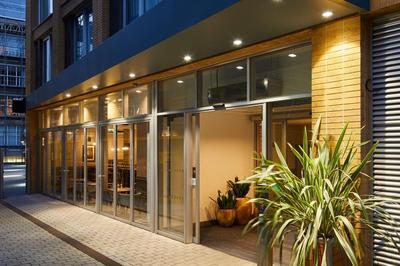
Residence Inn by Marriott London Bridge
 In this area
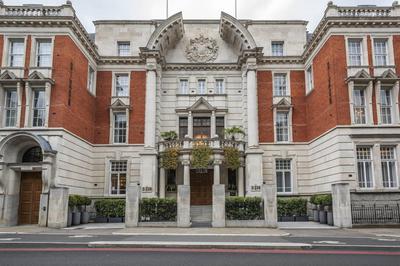
Residence Inn by Marriott London Tower Bridge
 In this area
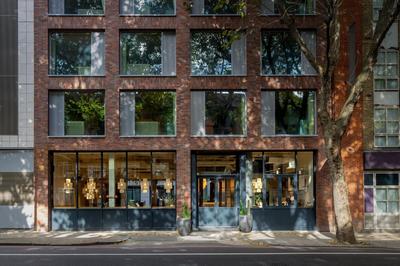
The Dixon, Tower Bridge, Autograph Collection
 In this area
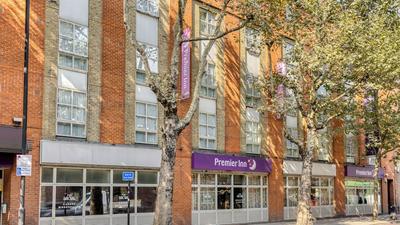
Bermonds Locke, Tower Bridge
 In this area
Premier Inn London Tower Bridge
Getting around Southwark & Bermondsey
London Bridge is the area's transport spine: a mainline rail terminus plus Jubilee and Northern line Underground platforms, with trains running to Waterloo East and Cannon Street on National Rail, and a direct Jubilee line run to Bermondsey station in just two minutes, continuing on to Canada Water and Canary Wharf. London Bridge station is also the main gateway into the neighbourhood from further afield — roughly 10 to 20 minutes from central London by tube, with both Heathrow and Gatwick reachable from here too. Once you're on the ground, the area is compact enough to walk end to end: it's a flat, walkable 20 to 25 minutes on foot from Tate Modern to Waterloo Bridge along the South Bank, and the whole stretch from Borough Market to the far end of the beer mile rarely takes more than half an hour at an unhurried pace.
Good to know
Southwark & Bermondsey — your questions
Is Southwark & Bermondsey a good area to stay in London?
Yes — it's well-connected (London Bridge station has mainline rail plus the Jubilee and Northern lines), walkable, and puts you next to Borough Market, Tate Modern and the Bermondsey Beer Mile. It gets crowded around the market and the Shard at weekends, and police data flags phone and bag theft as things to watch for.
What is the Bermondsey Beer Mile and when is it open?
It's an informal trail of more than twenty independent breweries and taprooms in railway arches along Druid Street, Enid Street and the surrounding streets toward South Bermondsey. Most only open Thursday or Friday through Sunday — turn up midweek and you'll find shutters down at most of them.
Is Borough Market open every day?
It runs full trading Wednesday to Saturday, opens with fewer stalls on Monday and Tuesday, and closes for full retail trading on Sundays — though some of the restaurants and bars around the market stay open.
How do you get from Southwark & Bermondsey to central London?
London Bridge station puts you 10-20 minutes from the West End or the City by Jubilee or Northern line, and it's a flat, walkable 20-25 minutes on foot from Tate Modern to Waterloo Bridge along the South Bank.
Gallery