
Behind almost every grand Georgian and Victorian terrace in London there's a narrower, humbler street you were never meant to notice — a cobbled lane where horses once slept, coachmen drank, and carriages were sluiced down after the ball. These are London's mews, and most of them have quietly become some of the most expensive real estate in the city, bought by people who love the low beams and the cobbles and could not care less that the walls once smelled of hay. A handful, though, are still doing something close to the original job. This is a walking guide to both kinds: the mews you can tour, ride, drink in or actually sleep inside, and the ones you can only stand at the end of and admire.
The word itself, and the one place it still means what it says
"Mews" is older than any of these streets. In the Middle Ages the king's hawks were kept — mewed, meaning caged while they moulted — at a royal mews near Charing Cross. When the hawks moved out and the royal horses moved in, the name stayed, and it spread from there to any row of stables built behind a smart Georgian or Victorian square: coach houses and grooms' quarters on the ground floor, hay lofts and staff rooms above. Cars replaced carriages in the early twentieth century and most mews were sold off for conversion — which is why the pattern repeats behind almost every smart London postcode today: a handsome terrace facing the square, and a scruffier, prettier lane running parallel behind it.
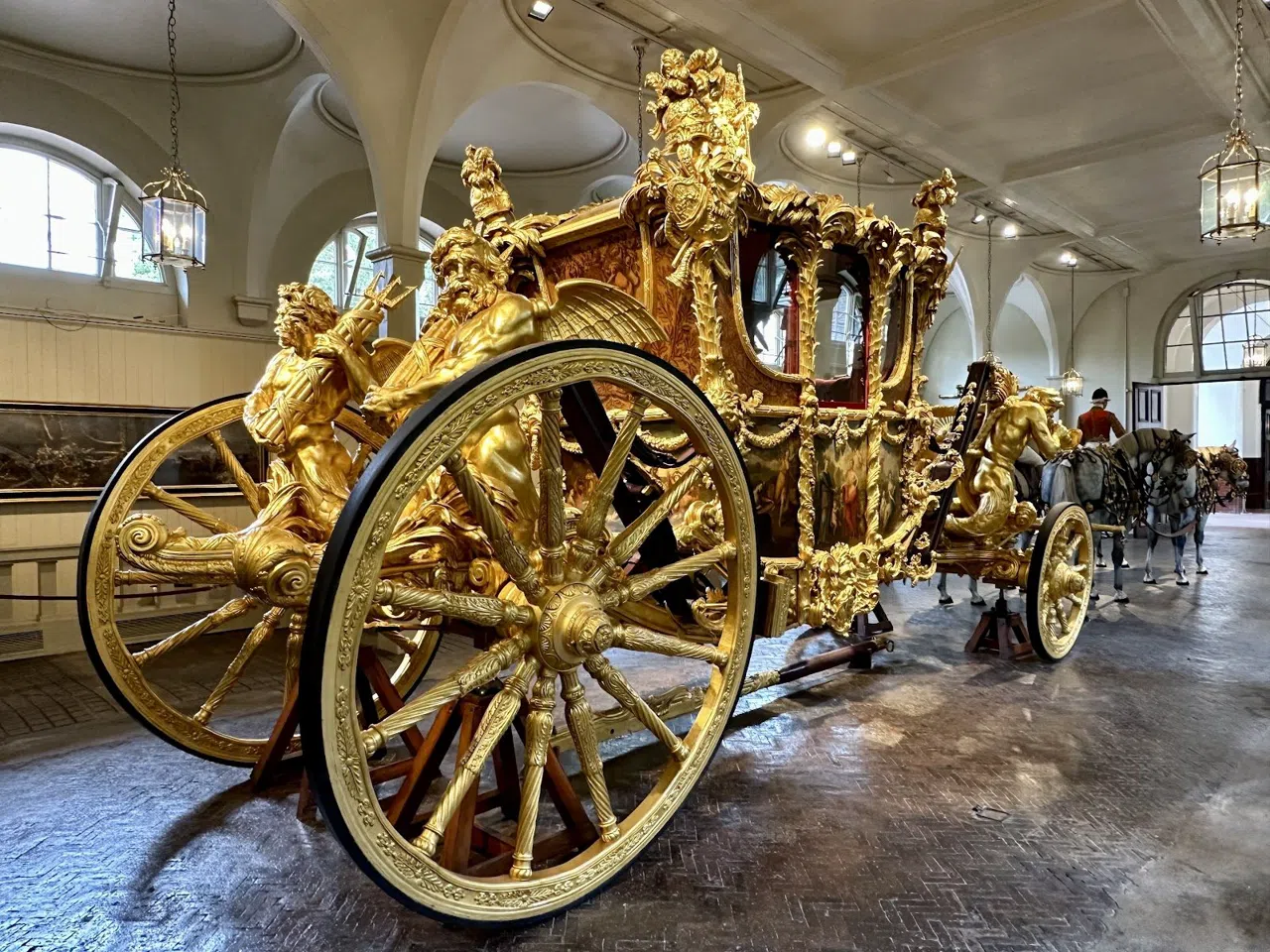
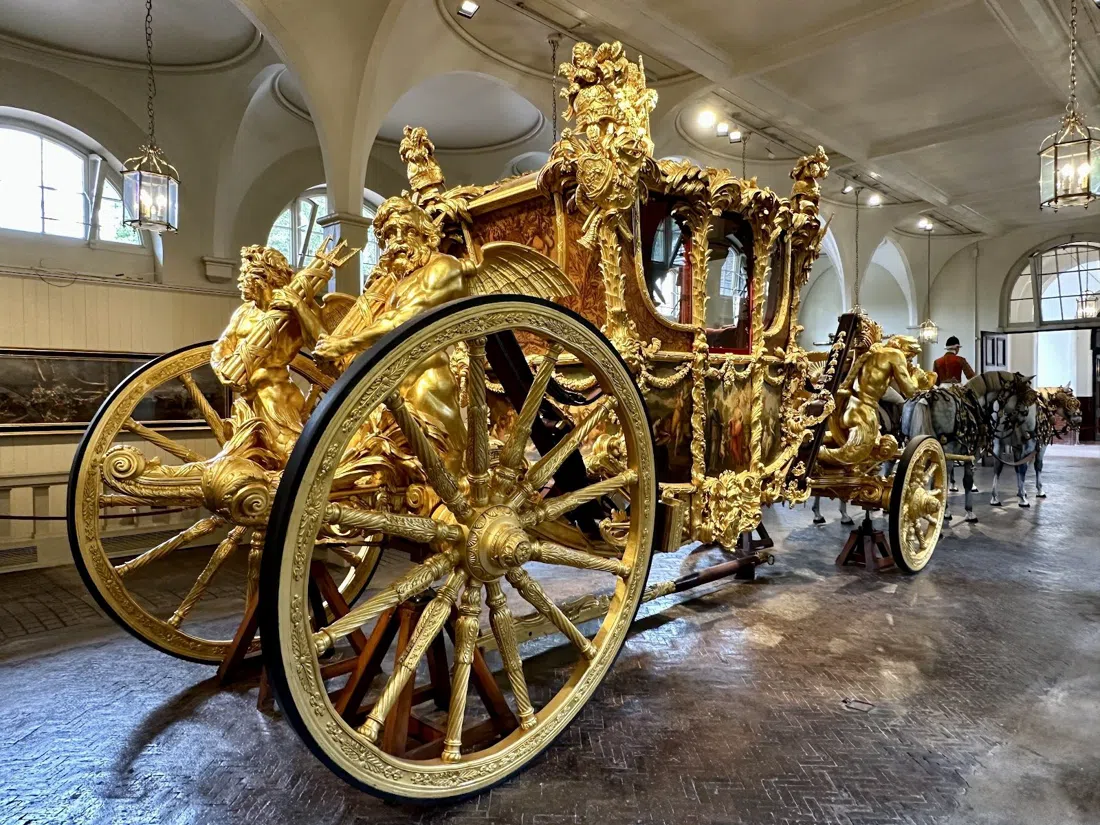
The one place the word still means exactly what it meant eight hundred years ago is the Royal Mews, Buckingham Palace. This is not a converted mews with a plaque explaining what it used to be — it's a working stable, right now, for the horses that pull the Gold State Coach and the rest of the royal carriage fleet, with the coach houses, tack rooms and horses themselves on view as you walk through. It's run as a proper visitor attraction, with multimedia guides and capacity for large groups, which makes it the easiest of everything on this list to simply turn up to and book. It's open seasonally, 5 March to 1 November 2026 — check before you plan a winter trip, because outside that window it's closed to visitors and you'll be looking at a locked gate. Adult tickets are £45.90 booked in advance, or £49.50 on the day combined with a Buckingham Palace ticket; book ahead if you want the discount.
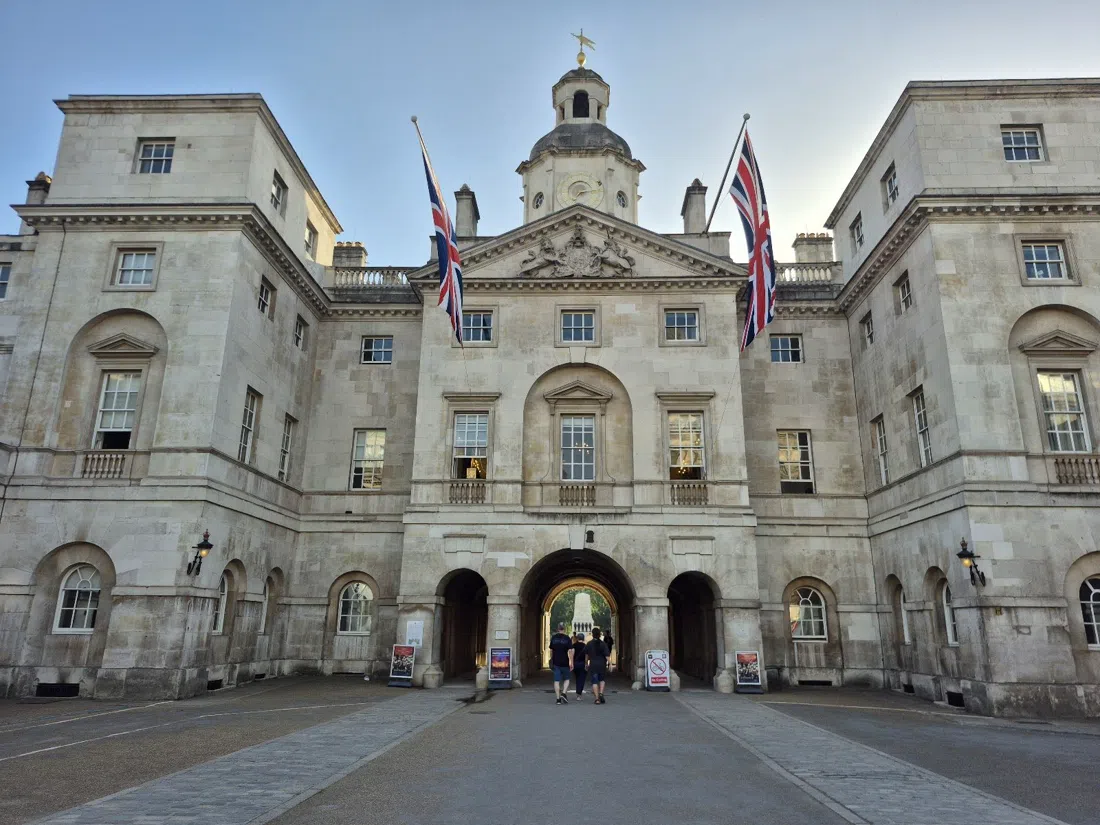
Ten minutes' walk away across St James's Park, along Birdcage Walk with the park on one side and the barracks on the other, is the other place still doing the job for real: the Household Cavalry Museum & Horse Guards stables in Whitehall. This is one of the only spots on earth where you can watch a working cavalry stable in action in the middle of a capital city — the horses are real, on duty, and stabled right there behind glass you can walk past. Groups are welcome, but check the calendar before you book: ceremonial days bring closures and crowd restrictions, and you don't want to arrive mid-parade. Tickets are £11 for an adult, £9.50 for a senior, £8 for a child, or £29 for a family — cheap enough that it's an easy add-on to a Buckingham Palace morning rather than a destination in itself.
Ride out from the same cobbles the last working mews ever used
Tucked off the Bayswater Road, a few minutes' walk north from Lancaster Gate, Hyde Park Stables on Bathurst Mews is the one place in London where "mews" isn't a historical description at all — it's current. Horses still live here and are ridden out from the same cobbles they've used for something like a century and a half, straight onto Hyde Park's bridleways rather than into a horsebox. It only works for small numbers: private and semi-private (two-rider) lessons, booked ahead, running roughly £109–£150 per person per hour depending on the lesson. This is not a walk-in, and it's not for a coach party — it's for someone who actually wants to ride, in the city, on a horse that lives five minutes from Hyde Park Corner, which is a strange and good thing to be able to say you've done. Book well ahead for weekend slots; weekday mornings, when the park is quiet and the light is good, are the easiest to get and by far the nicest time to be out on the bridleways.
Sleep inside one, rather than just photograph it
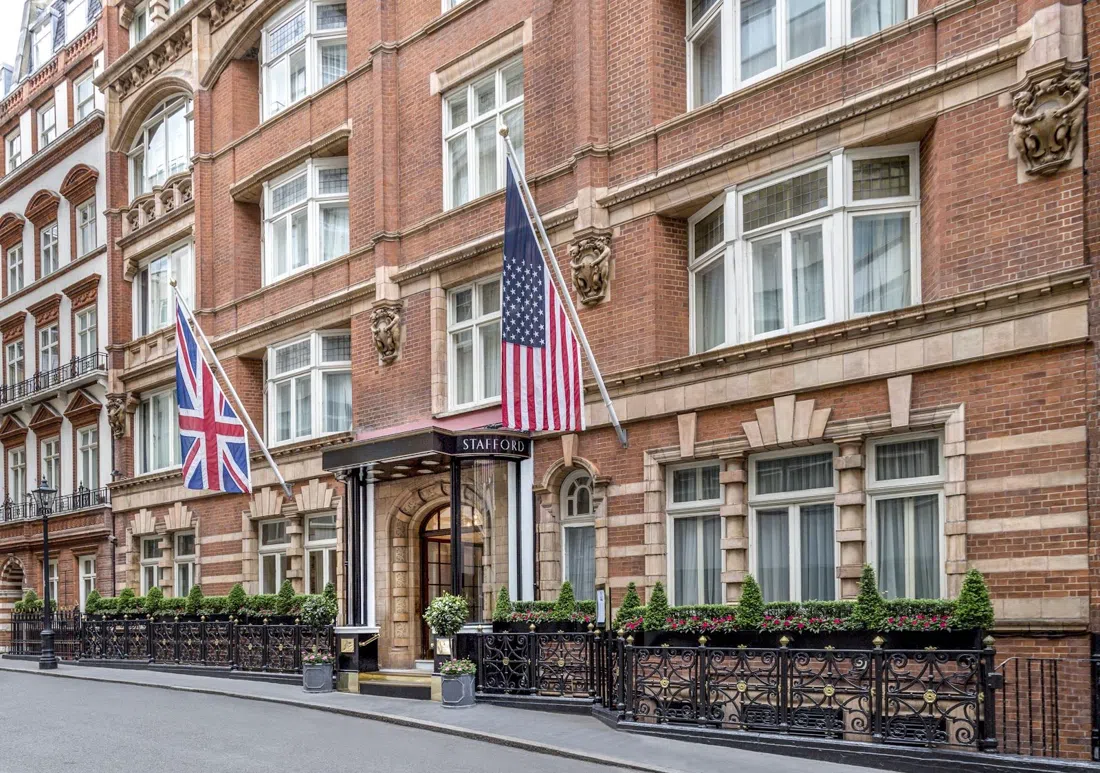
Almost everyone who visits a London mews is looking from the street. The exception is The Stafford London, in St James's, whose Carriage House and Mews Suites are a genuine converted stable block you can actually book a room in rather than just admire through a gate. It's the rare case of getting to sleep inside the real thing instead of paying for a hotel that merely borrows the aesthetic — cobbles at the door, coach-house proportions, a private courtyard the hotel can open up for small groups or events. It's priced like the luxury stay it is, suites typically starting above £700 a night, so this is an occasion rather than a budget base. If the mews are enough to make you want to stay inside one rather than just walk past, start your London hotel search with The Stafford itself before you look anywhere else — nothing else on this list lets you actually sleep in the stable.
Drink where the coachmen did
Three of London's mews pubs survive from the days when a coachman needed somewhere to wait, warm up and get fed while his employer was upstairs at a dinner party, and each one now handles a crowd differently — worth knowing before you turn up as a group of eight expecting a table.
The Grenadier, on Wilton Row in Belgravia, is Belgravia's most atmospheric mews conversion — built originally for cavalry officers and now London's most photographed "haunted" pub, complete with the usual ghost story attached to a gambling debt. It's a genuinely cosy single room that fills fast, so small groups are fine if you book ahead, but don't expect to walk six people in on a Friday night and get seated. Prices sit mid-range for a London pub.
The Guinea Grill, on Bruton Place in Mayfair, is a different proposition entirely: a proper steakhouse that's had an inn on the site since 1423, whose steak-and-kidney pie has repeatedly won British Pie Awards. It recently extended its dining room and added two private dining rooms, so it's genuinely set up for groups in a way the other two mews pubs aren't — book the private rooms if you're arriving as a party. Pricing is steakhouse-level, not pub-level.
The Nag's Head, on Kinnerton Street back in Belgravia, is the opposite end of the scale again: genuinely tiny, a free house since 1991, first-come seating and no real capacity for groups. Go for the room itself, on one of Belgravia's most intact mews streets, and go in ones and twos rather than as a party. Cask ale prices, and the kind of pub where a stranger at the next table becomes part of the evening.
Wilton Row and Kinnerton Street are close enough together, both a short walk from Hyde Park Corner, to do as a single quiet crawl; Bruton Place is a further twenty-odd minutes north across Green Park in Mayfair, so treat the Guinea Grill as a separate outing — ideally dinner, given it's the one built to actually feed a table.
Just walk and look: the prettiest mews streets left
The rest of London's mews aren't set up for visitors at all — they're just streets, where people live behind the old stable doors, and the only thing to do is walk quietly, look, and take a photograph without blocking anyone's step.
Kynance Mews, in South Kensington, is the most photographed mews in the area: a run of coach houses built 1862–79 for the grand houses of Cornwall Gardens, renamed in 1924 after Cornwall's Kynance Cove. It's free to walk and small groups are fine as long as you're quiet — no tour buses, no megaphones, and remember it's somebody's front door.
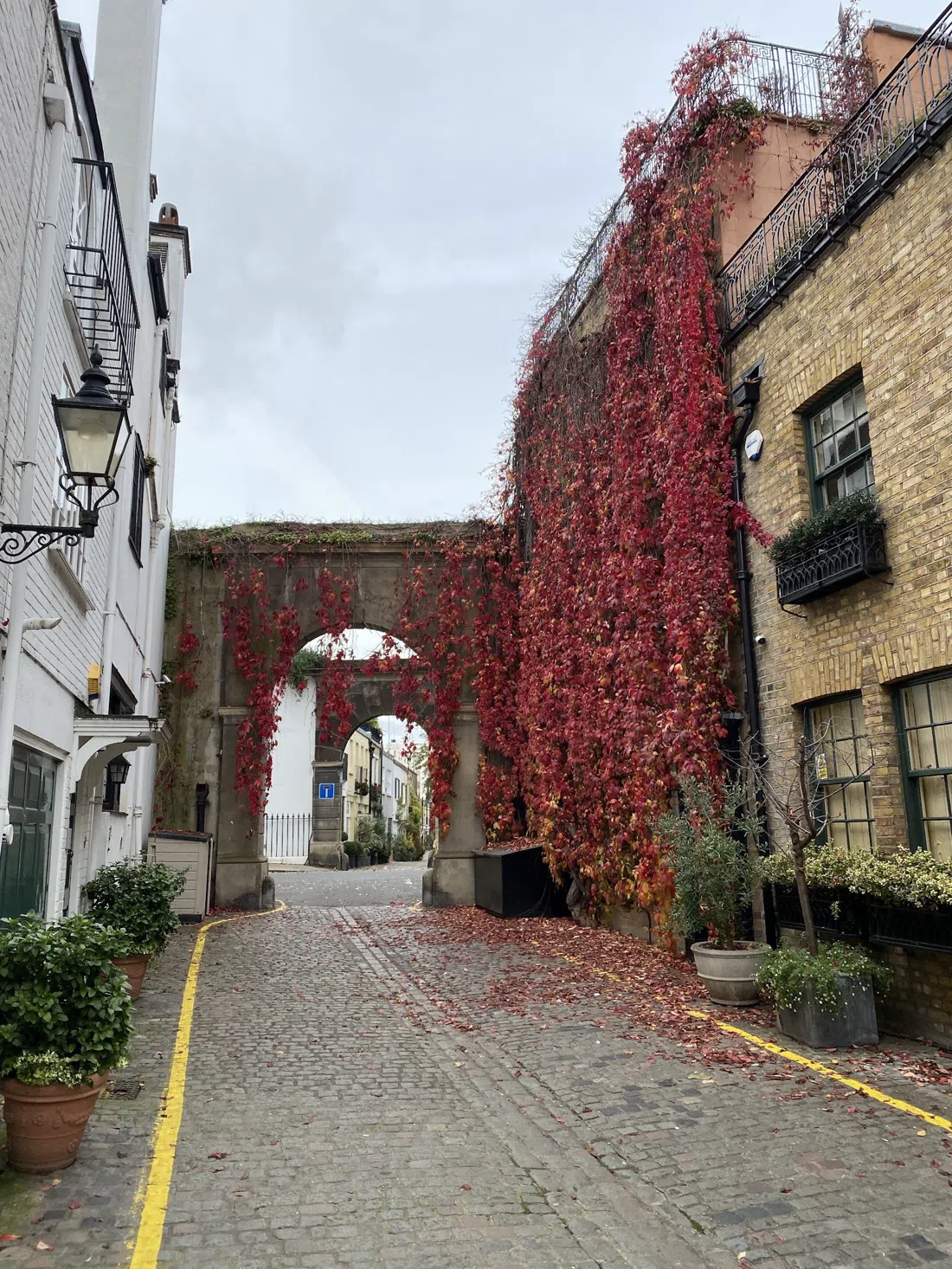
St Luke's Mews, in Notting Hill, is a genuine former stable lane rather than a set built to look like one — it's the real location for Mark's cue-card scene in Love Actually, which is why it draws the odd pilgrimage, but on any normal weekday morning it's just a quiet residential street.
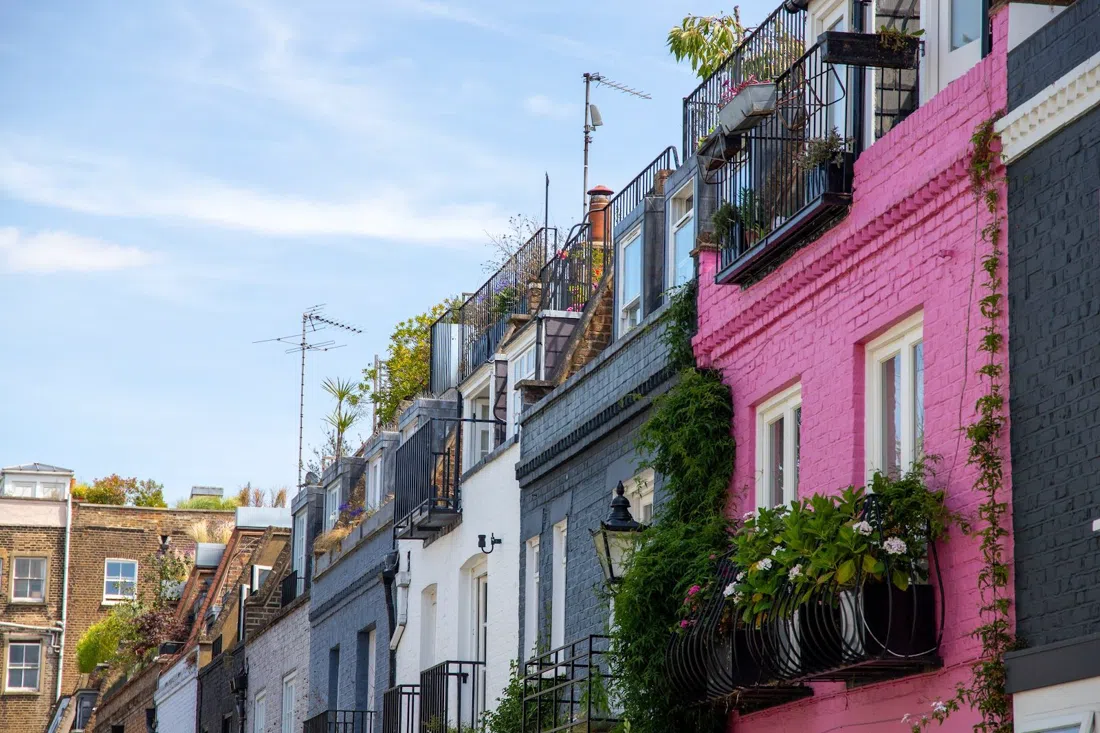
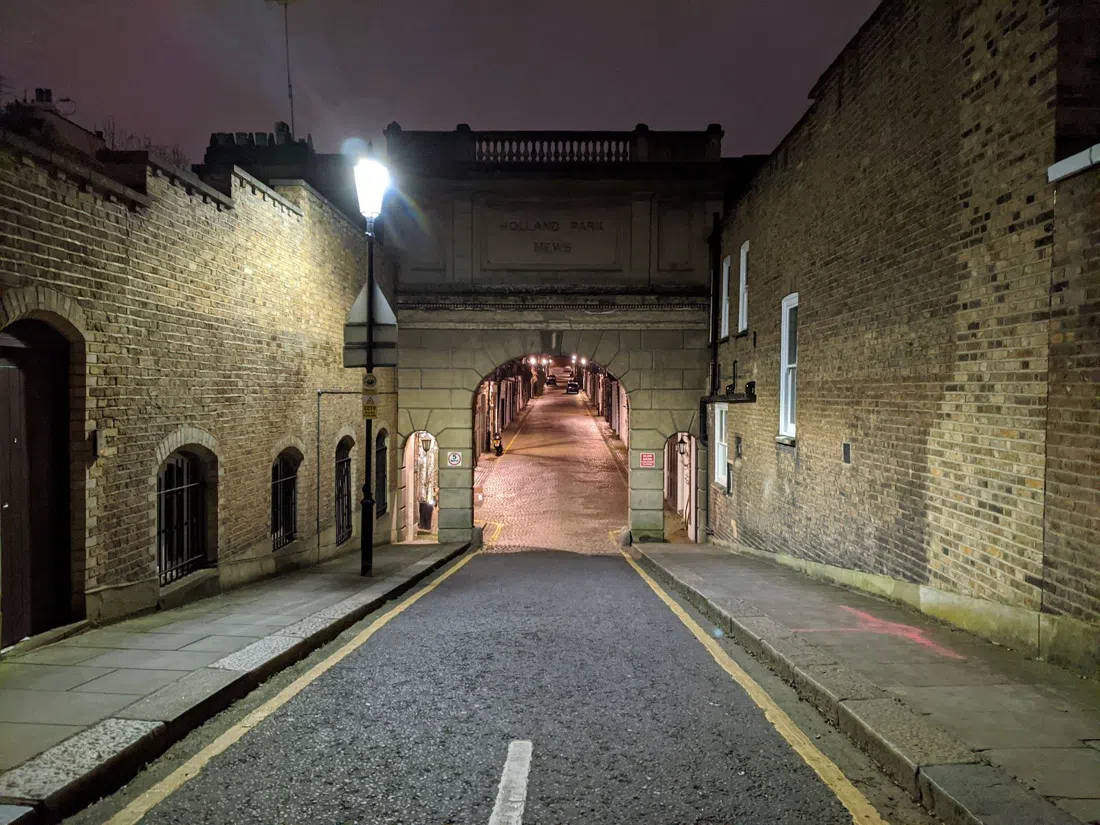
Holland Park Mews, by Holland Park, converted 67 houses out of 68 original stables built between 1860 and 1879, and one of them turned up in an episode of The Crown. It's a short walk from St Luke's Mews, so the two pair naturally into one gentle Notting Hill–Holland Park loop.
Ennismore Gardens Mews, in Knightsbridge, was built by the Thorn brothers in the late 1800s as coach houses and has been a long-running backdrop for film and television ever since — less famous than Kynance Mews, but just as intact, and usually far quieter.
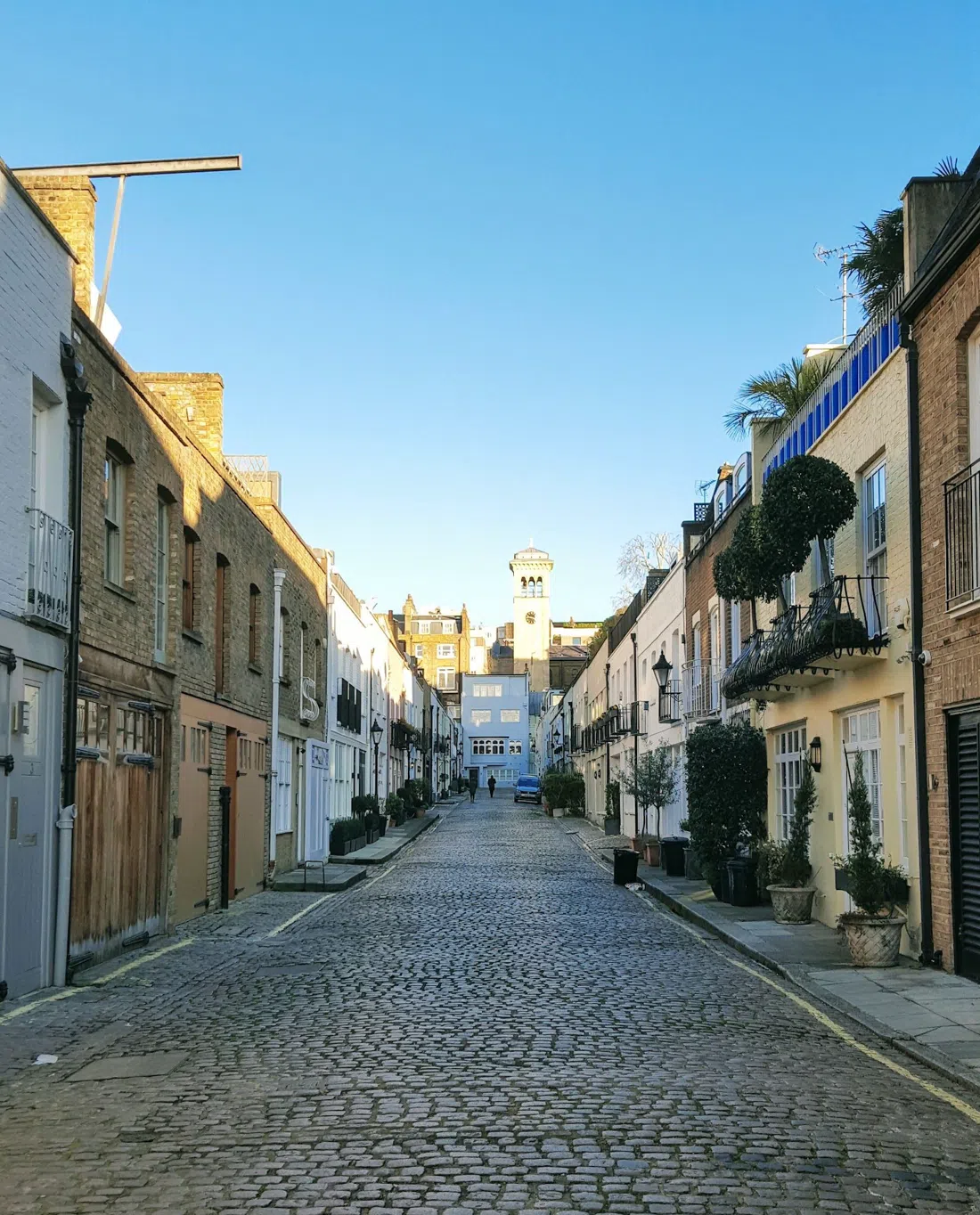
All four are free to walk and none of them want a crowd. Go early — before 9am on a weekday is the best window, when residents' cars are still parked but the light is soft and you're not competing with anyone else's tripod — and keep your voice down. These are homes, not attractions, and the residents have made their feelings about tour groups fairly well known over the years.
For the wider context on how these streets fit into the rest of the city — and what else is worth your time nearby — the London guide is the place to start planning the rest of the trip around them.
Getting there, timing it, and what it actually costs
Transport. Royal Mews and Horse Guards are both a short walk from St James's Park, Victoria or Westminster tube. Hyde Park Stables is nearest Lancaster Gate or Queensway. The Stafford and the mews pubs cluster around Green Park, Hyde Park Corner and Knightsbridge. Kynance Mews is closest to Gloucester Road or South Kensington; St Luke's Mews and Holland Park Mews are near Notting Hill Gate and Holland Park stations respectively; Ennismore Gardens Mews is a walk from Knightsbridge or South Kensington. None of it needs a car, and a car is the last thing you want on cobbles this narrow.
Cash. You won't need much. All three pubs and both museums take cards; carry a little cash only if you want to tip generously at the Grenadier or the Nag's Head, where the room rewards being a regular for an evening rather than a passer-through.
Timing. The Royal Mews only runs 5 March–1 November 2026 — outside that window, skip straight to Horse Guards and the residential mews streets, which work year-round. Photograph the residential mews early on a weekday morning; by mid-afternoon on a weekend they're full of other people's cameras and, on Kynance Mews especially, occasional delivery vans that ruin the shot. Book Hyde Park Stables and any Stafford stay well in advance — both run on limited capacity, not walk-up availability.
Budget. A free morning is entirely possible: walk Kynance Mews, St Luke's Mews, Holland Park Mews or Ennismore Gardens Mews for nothing, then pay only for what you choose to add — £11 at Horse Guards, £45.90 at the Royal Mews, from £109 an hour to actually ride, or £700-plus a night if you want to sleep inside one. The mews themselves cost nothing at all; it's only the things people have built inside them that charge admission.