
London's other river runs at walking pace, hemmed by brick and willow, and for eight and a half miles it lets you cross the city without touching a single main road. Start where the Regent's Canal meets the wider canal network at Little Venice and you can walk, cycle or ride a slow boat all the way to the tidal Thames at Limehouse, past a zoo, an underground tunnel, a bookshop that floats, and a market built entirely around a working lock. Do it in one long day or spread it over a weekend — the towpath doesn't care, and neither should you.
Little Venice: Where the Water Story Begins
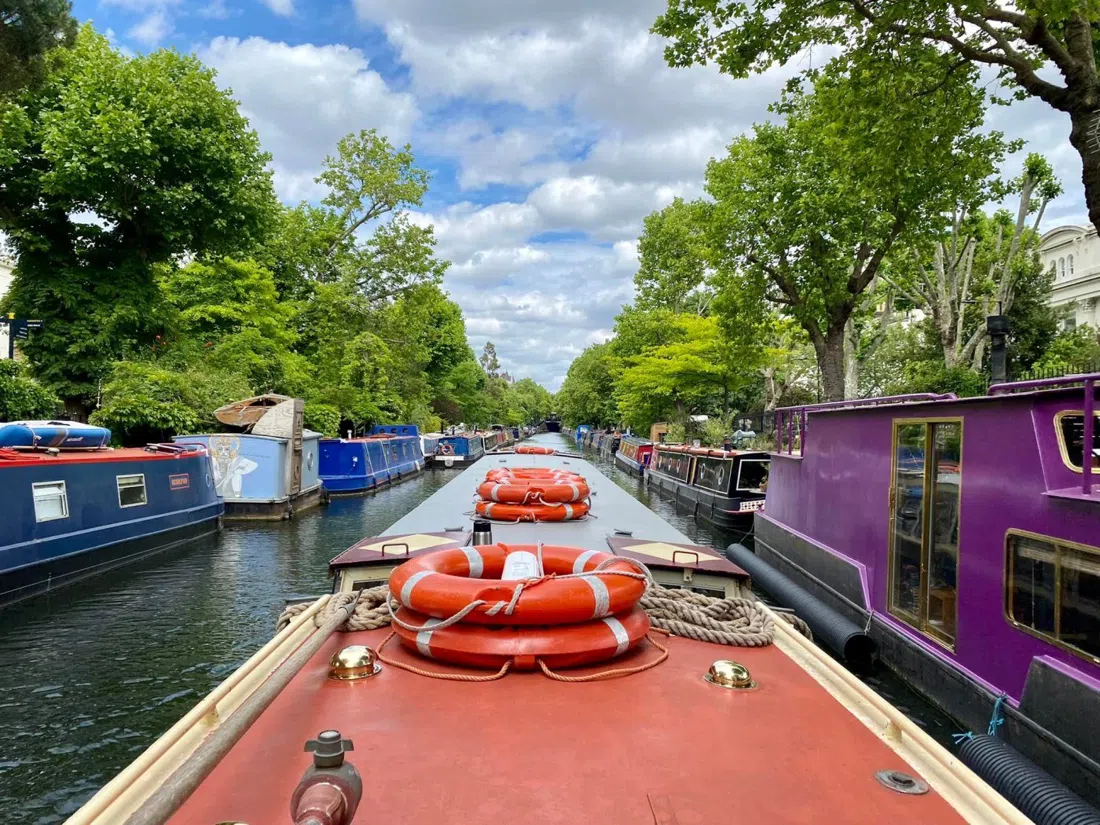
Little Venice (W9) is the calm before everything else. This is where the canal network arriving from the west meets the Regent's Canal proper, spreading into a wide triangular pool — Browning's Pool, named for the poet who lived on its bank — ringed by stucco terraces and a scatter of permanently moored narrowboats with chimney smoke and potted herbs on their roofs. There's nothing to book to simply stand on the towpath at Blomfield Road or Warwick Avenue and watch the boats turn; it's public towpath the whole way, and it absorbs a school group or a lone walker with equal ease.
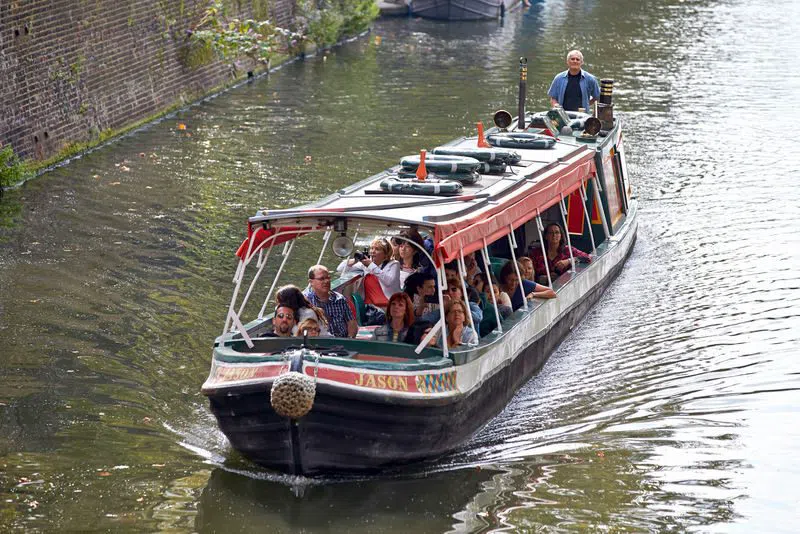
Two operators run the water itself from here. London Waterbus Company works the Little Venice–Camden stretch with a comfort cruiser and live commentary, plus an adults-only 'Camden Ahoy!' sailing for larger private groups who'd rather not share the boat with a school trip; reckon on £15-£20 per adult one-way, and book the Camden Ahoy! slot ahead if you've got a stag do or a birthday party in tow. Jason's Trip, the older of the two — it's been sailing since 1951 — runs a more heritage-flavoured service on the same water, £18 one-way or £23 return for an adult, on its April–October 2026 timetable; it suits families and small groups well, but call ahead if there are more than six or seven of you, since the boats aren't huge.
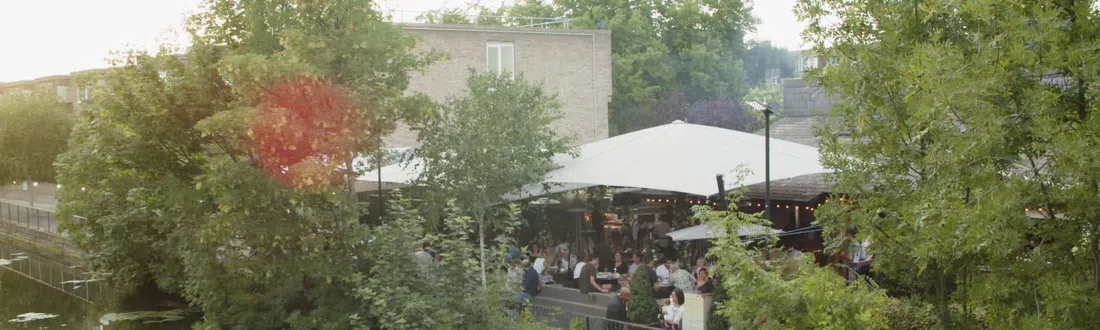
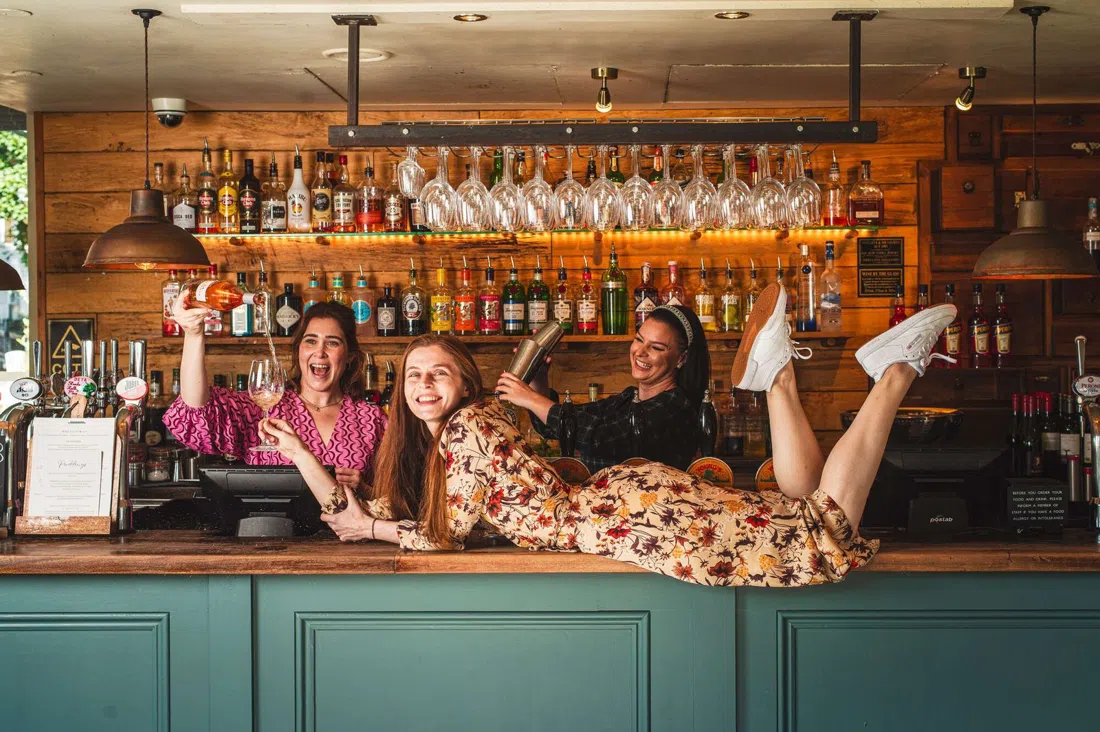
If you'd rather eat before you walk than after, The Waterway (W9), on the Warwick Avenue side, has the best terrace on this stretch of canal by general consensus — big enough for private events, informal enough that you can walk in off-peak without a booking. Weekday lunchtimes it's half empty; Friday and Saturday evenings it fills fast, so if you want a table on the water for six or more, ring ahead.
Through Regent's Park to Camden Lock
From Little Venice the towpath slides east along the northern edge of Regent's Park — you'll hear the aviary before you see it, and on a clear morning the giraffes are visible over the fence from the water. Just before the canal bends towards Camden, moored at Cumberland Basin near Prince Albert Road, sits the Feng Shang Princess — London's only floating Chinese restaurant, and has been since the 1980s, a genuinely strange, brightly lacquered red-and-gold barge that looks like nothing else moored on this canal. It takes group bookings and private dining, but book ahead for a party of any size; it trades as much on the photograph as the food, and everyone who walks past stops for the photograph.

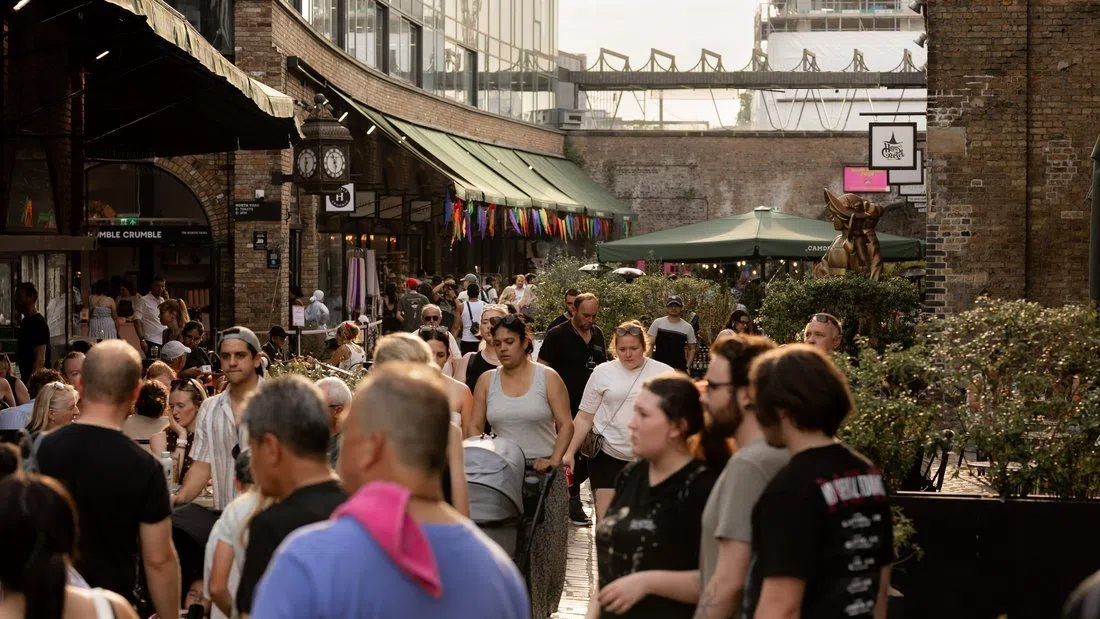
Then the canal narrows and the towpath gets busy: this is the approach to Camden Lock Market (NW1), the commercial and visual heart of the whole walk, still built around a working double lock that you can watch narrowboats rise and fall through most of the day. It's free to enter and open-air, so it takes a crowd of any size without a booking — which is exactly the problem at weekends, when the towpath through here can be shoulder to shoulder by early afternoon. Go on a weekday, or go before 11am on a Saturday, if you actually want to see the stalls rather than the backs of other people's heads.
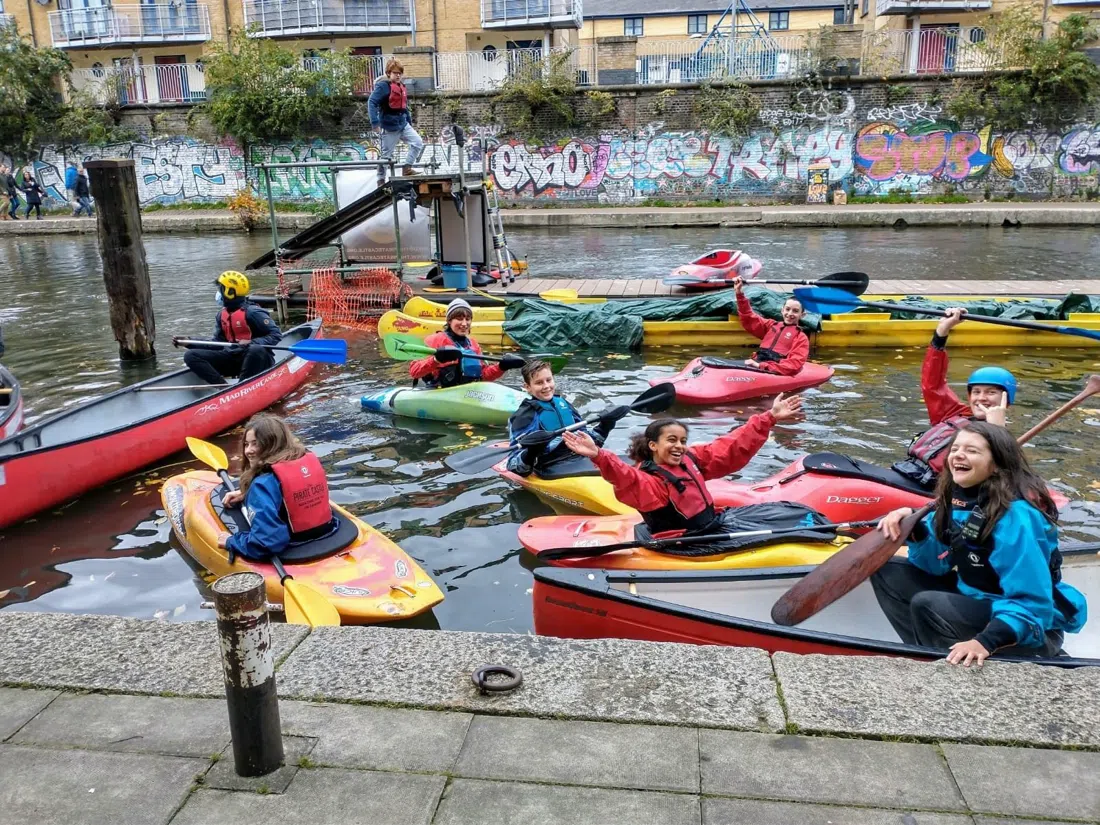
Right by the lock, under the railway bridge, The Pirate Castle (NW1) is the best reason to stop walking and get onto the water yourself. It's a working charity, not a tourist attraction dressed up as one, and it runs canoe, kayak and paddleboard sessions for groups, schools and corporate away-days from around £15-£25 per person, plus its 2026 holiday schemes for kids. Book ahead — sessions are run, not drop-in — but this is the one stop on the whole route where you stop being a spectator on the canal and become part of it.
Underground at Islington
East of Camden the towpath keeps going past the Gloucester Avenue moorings, but at Islington the canal does something the walker can't follow: it goes underground. The Islington Tunnel runs 960 yards under Angel and Upper Street with no towpath at all — boats have always had to be 'legged' through it, pushed along by boatmen's feet on the tunnel roof — so you'll need to leave the water at Duncan Street and pick the canal back up on the other side near Colebrooke Row, a ten-minute walk through Islington's back streets that's honestly one of the nicer detours on the route.
Where the canal resurfaces at City Road Basin, The Narrowboat (N1) is worth the small detour off the towpath: it's the only pub actually sitting on the Regent's Canal in Islington, a proper locals' boozer rather than a tourist stop, with a balcony over the water and function rooms available for private hire if you're organising something bigger than a round of drinks. It welcomes walking groups without fuss, which isn't a given on this stretch.
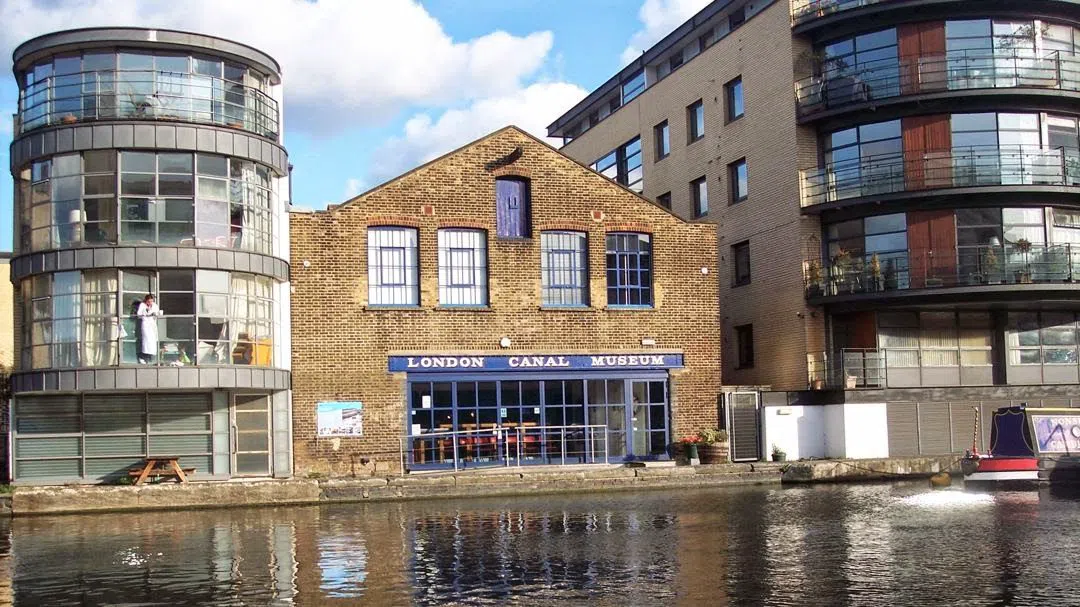
A little further on, near Battlebridge Basin, the London Canal Museum does the job none of the pubs or markets can: it explains what all this infrastructure was actually for, with ice-well history and canal-boat life laid out for £6-£8 entry, group-bookable for school and society visits. Its real trick, though, is the only way most people will ever pass through the Islington Tunnel: boat trips aboard the museum's own narrowboat, Long Tom, take you into the tunnel and back — book ahead, since capacity is a single boat's worth.
King's Cross: Industrial Past, New Skyline
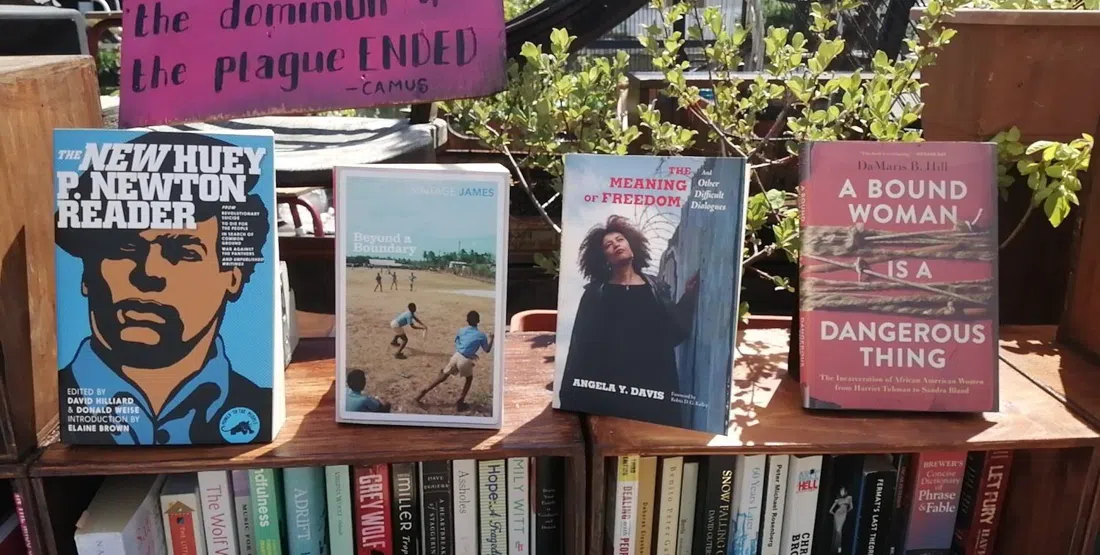
From the museum the canal opens out into the stretch that's changed more than any other in the last decade. Word on the Water (N1), moored just west of the King's Cross basins, is a genuinely one-off survivor — a proper floating bookshop with a roof stage that hosts open-mic and poetry nights, and it's a lovely stop for a couple or a pair of friends rather than a big group; the deck simply isn't built for a crowd, so don't turn up expecting to browse twelve-abreast.
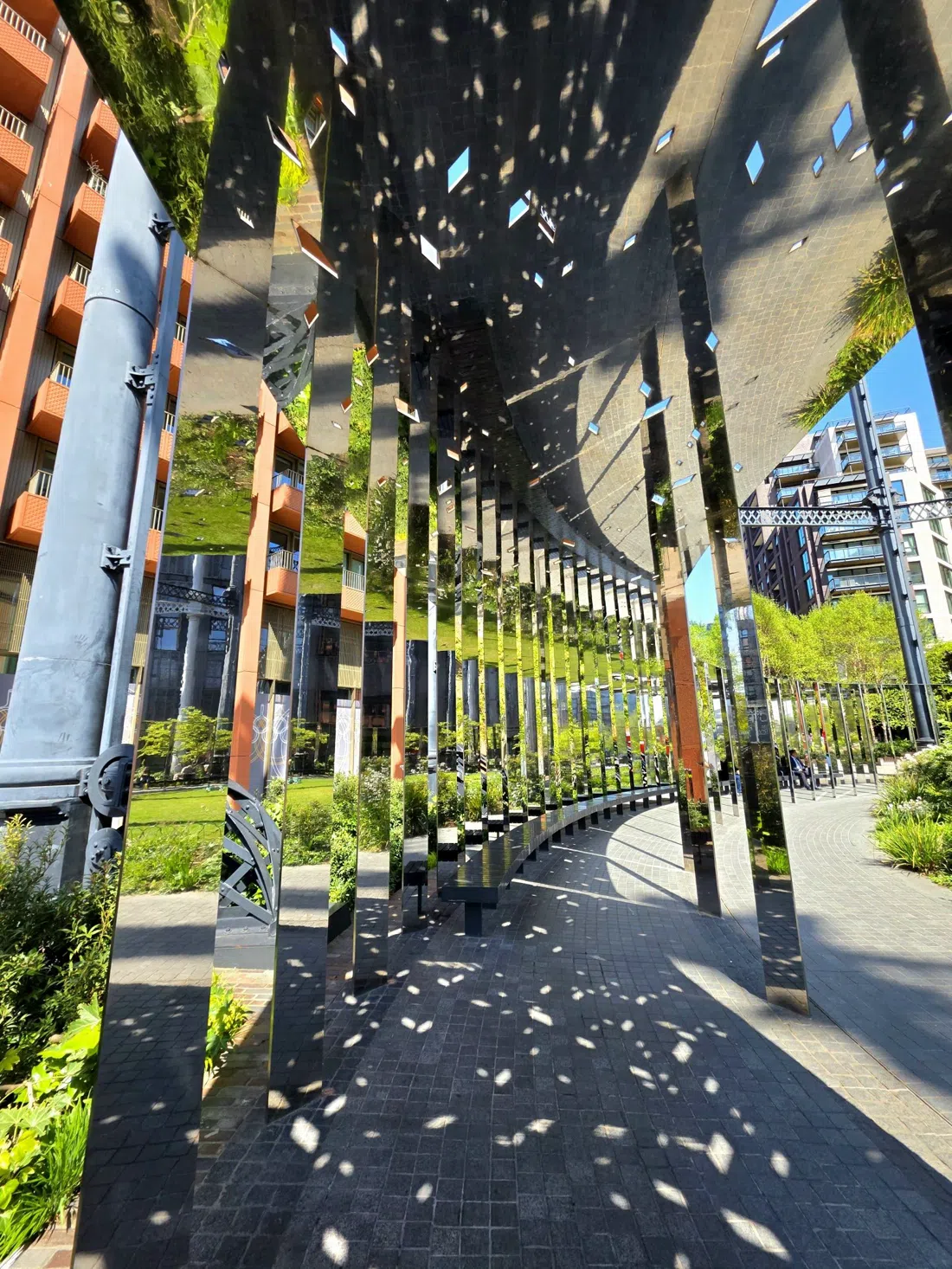
Behind it, Coal Drops Yard & Gasholder Park (N1C) is the most striking piece of architecture directly on the canal anywhere on the route — two Victorian coal warehouses reworked into a shopping and restaurant quarter, with a ring of restored gasholder ironwork now framing a public lawn beside the water. It's free to enter, fully open, and takes a large group without any trouble at all; this is where King's Cross stopped being a place you passed through on the way to St Pancras and became somewhere you'd actually plan to stay.
Directly across the water, Camley Street Natural Park is the clearest single stop on the whole route for the canal's other identity — as a two-mile wildlife corridor cutting straight through the city. It's a free public nature reserve run by the London Wildlife Trust, reopened in 2021 with a proper visitor centre, and it runs bookable group and school sessions if you want a naturalist rather than a leaflet. Even a ten-minute wander through it is enough to remember that herons and kingfishers use this canal too, not just narrowboats.

East to Hackney and the River
Past King's Cross the towpath runs long and quiet through Islington's eastern edge and into Hackney — the busiest, most photographed section of canal is behind you now, and the walking gets genuinely peaceful. Around the Whitmore Road bridge, in De Beauvoir Town, the Towpath Cafe is worth timing your walk around: it's small, informal and deservedly a cult favourite among Londoners, good for a coffee or a plate of something simple for two or three people rather than a private booking for twelve. It only opens March to November, so check its seasonal dates before you build a whole afternoon around it — turning up in January to a shuttered hatch is a rite of passage for first-time visitors.

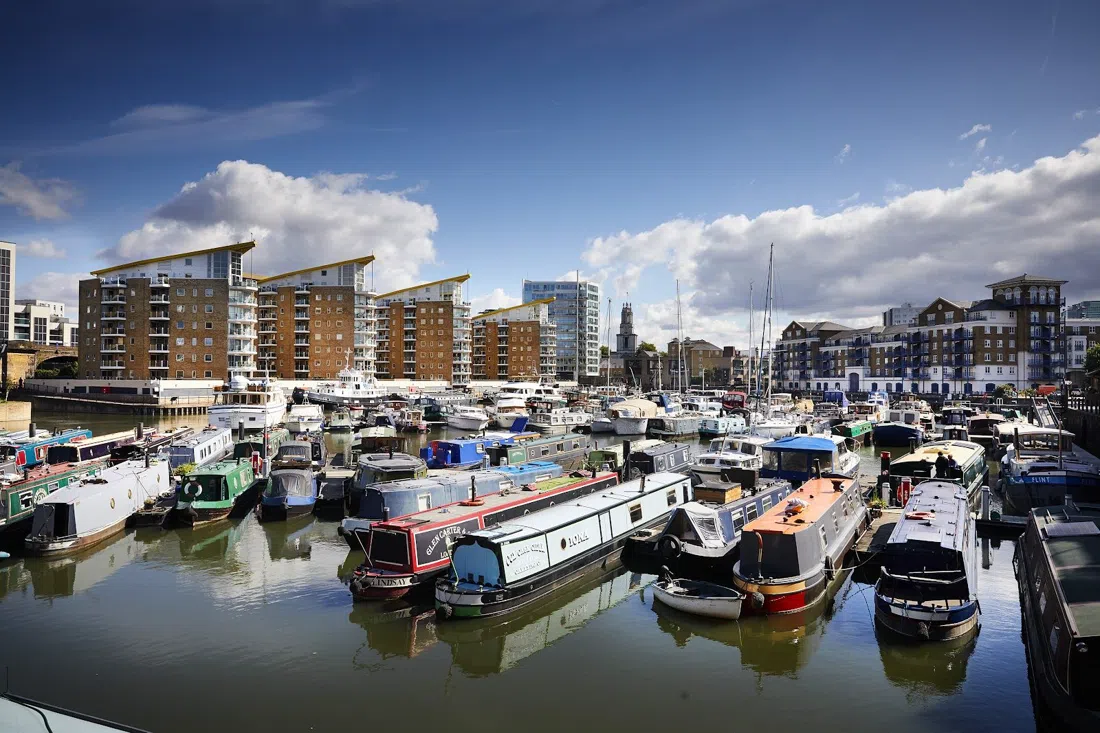
From here the canal runs on past the edge of Victoria Park and Mile End, then finally drops south towards the river. Limehouse Waterside & Marina (E14) is the walk's second bookend and its most dramatic: an open public basin and walkway, free to wander, where the still, brown water of the Regent's Canal meets the tidal push of the Thames through a working ship lock. Boats here range from narrowboats to proper yachts, and on a rising tide you can watch the lock gates do their job in real time. It's a quieter, less obviously photogenic finish than Little Venice's stucco terraces, but it's the honest one — this is where London's canal actually goes to work.
Planning the Walk
Getting there and back: Little Venice is a short walk from Warwick Avenue or Paddington stations; Limehouse has its own DLR and London Overground station, so there's no need to walk the route in reverse to get home. The full towpath from end to end is roughly 8.6 miles (about 13.8km) and mostly flat, hard-surfaced and well signed — allow four to five hours walking at an easy pace with stops, or a full day if you're doing Camden Lock and King's Cross properly. It's also entirely rideable by bike, though the towpath narrows sharply through Camden and King's Cross on summer weekends, and you'll be walking your bike through those stretches whether you planned to or not.
Cash and cards: every venue on this route takes cards; carry some cash anyway for smaller market stalls at Camden Lock, which still skew cash-friendly.
Timing: the towpath rewards going against the grain — early morning or a weekday for Camden Lock and King's Cross, since both are genuinely crowded by early Saturday afternoon; the Islington Tunnel detour and the Hackney stretch stay quiet no matter when you go.
Budget: you can walk the whole route for nothing beyond transport and food. A boat leg (Little Venice to Camden, roughly £15-£20) plus lunch at a canalside pub and an hour at the Canal Museum will run somewhere around £40-£60 per person for a full day out; the paddlesport sessions at the Pirate Castle add another £15-£25pp on top if you want to get on the water yourself.
If you're building a longer London stay around this walk, start with a London hotel search, and for everything else in the city, the full London guide covers the rest of it.